Chaneque Legend, Origin and Folklore | Tabula Supernaturalis
Chaneque is catalogued under Fae & Little Folk from Veracruz Cloud Forests, Mexico. Read origin, appearance, sightings, cultural cousins, and source notes.
Origin and tradition
Nahua and Gulf Coast tradition describes chaneques as small guardians of dangerous places, springs, mountains, forests, and wild animals. This atlas keeps the older tradition separate from later reports: it locates the legend in Veracruz Cloud Forests, Mexico, and treats sightings as evidence of transmission rather than proof of a verified creature.
Appearance
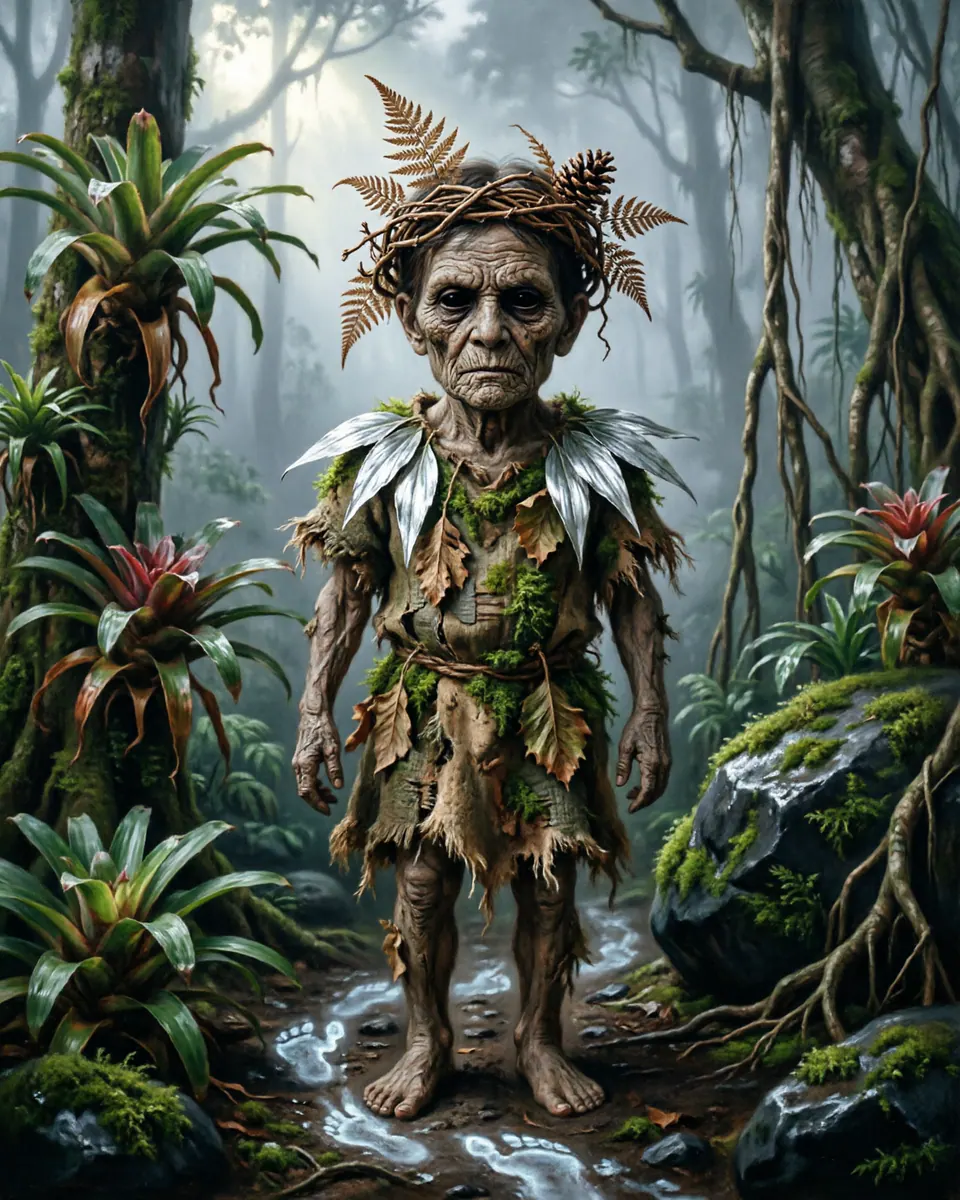
A small forest person with an old face, dark eyes, and a childlike body, sometimes wearing leaves or a small hat and leaving pale traces on the path. The creature should read as small or uncanny through scale, clothing, tools, footprints, and boundary spaces such as houses, fields, trees, or stones.
Reported abilities
- Forest Disorientation
- Animal Guardian Compact
- Tonalli Fright Theft
Field notes
Travelers who disrespect springs or old trees may be led in circles for days. Folk remedies often center on restoring the frightened person's lost spirit or vital force. Little-folk traditions often work like rules for living with a landscape or household, so the atlas emphasizes bargains, offerings, tricks, and respect for boundaries.
Related traditions
Closely tied to Alux and Duende traditions, but more explicitly connected to Nahua ideas of place-guardians and spiritual fright. The comparison is motif-based rather than a claim of direct borrowing: it links Chaneque to related beings through trickster rules, miniature scale, domestic or field boundaries, offerings, hidden labor, and the uncertainty between helper and threat, while preserving its local name, place, and cultural function.