Duendes de Costa Rica Legend, Origin and Folklore | Tabula Supernaturalis
Duendes de Costa Rica is catalogued under Fae & Little Folk from Central Valley Homes, Costa Rica. Read origin, appearance, sightings, cultural cousins, and...
Origin and tradition
Costa Rican oral tradition adapts the broader duende figure into household and roadside stories about small beings who hide children, tools, and travelers. This atlas keeps the older tradition separate from later reports: it locates the legend in Central Valley Homes, Costa Rica, and treats sightings as evidence of transmission rather than proof of a verified creature.
Appearance
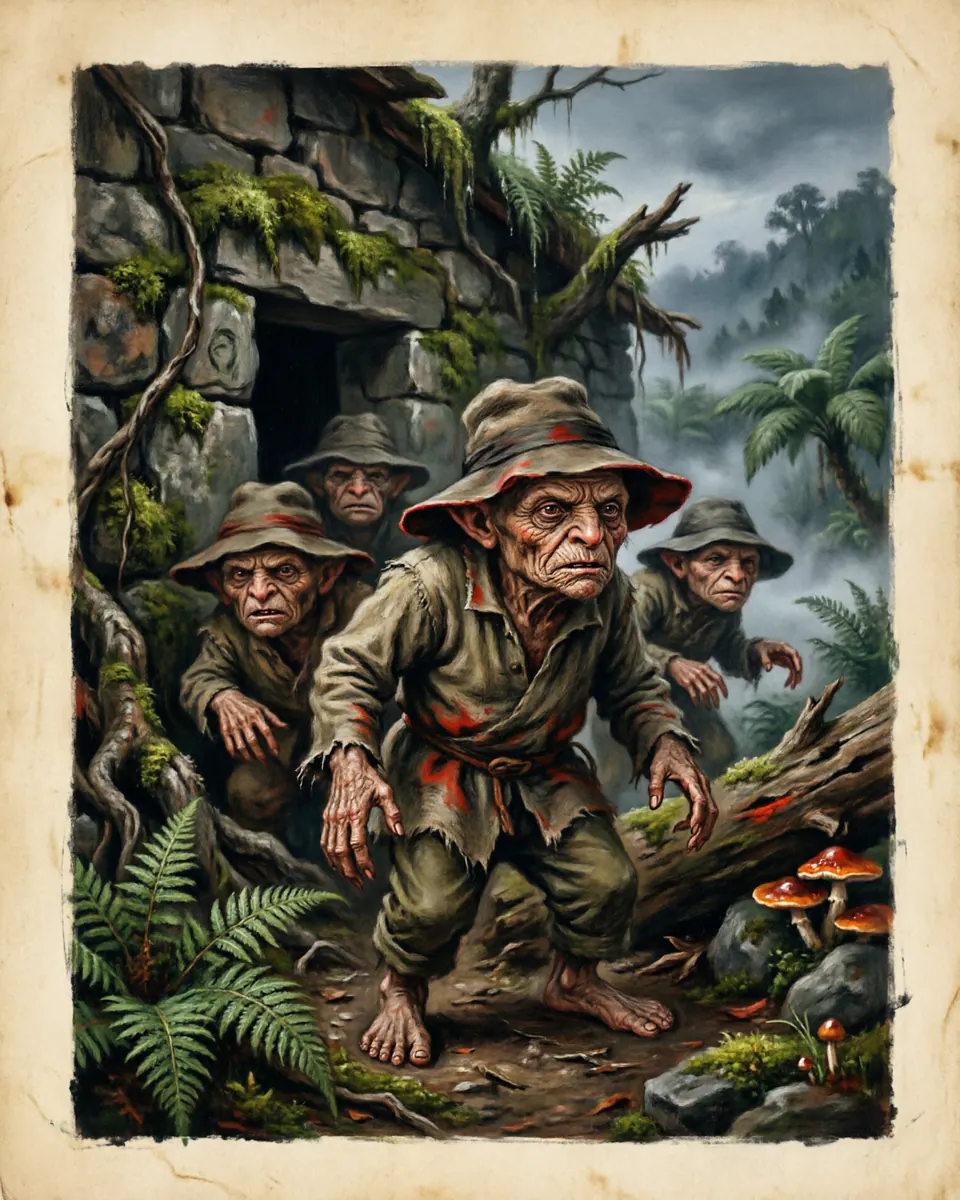
Tiny old men or children in broad hats, with quick hands, wrinkled faces, and the habit of vanishing near walls, roots, and abandoned paths. The creature should read as small or uncanny through scale, clothing, tools, footprints, and boundary spaces such as houses, fields, trees, or stones.
Reported abilities
- Child-Luring Songs
- Household Mischief
- Roadside Vanishing
Field notes
Families often describe the duende as partly playful and partly dangerous: a trickster who may become threatening if mocked or followed. Little-folk traditions often work like rules for living with a landscape or household, so the atlas emphasizes bargains, offerings, tricks, and respect for boundaries.
Related traditions
A Costa Rican branch of the Spanish-language Duende family, sharing household mischief with Leprechauns and field spirits. The comparison is motif-based rather than a claim of direct borrowing: it links Duendes de Costa Rica to related beings through trickster rules, miniature scale, domestic or field boundaries, offerings, hidden labor, and the uncertainty between helper and threat, while preserving its local name, place, and cultural function.