Yūrei Legend, Origin and Folklore | Tabula Supernaturalis
Yūrei is catalogued under Spirits, Ghosts & Demons from Kyoto / Tokyo, Japan. Read origin, appearance, sightings, cultural cousins, and source notes.
Origin and tradition
Edo-period ghost stories (Kaidan) of women who died with heavy grudges (Onryō) returning to haunt their murderers via sacred water wells. This atlas keeps the older tradition separate from later reports: it locates the legend in Kyoto / Tokyo, Japan, and treats sightings as evidence of transmission rather than proof of a verified creature.
Appearance
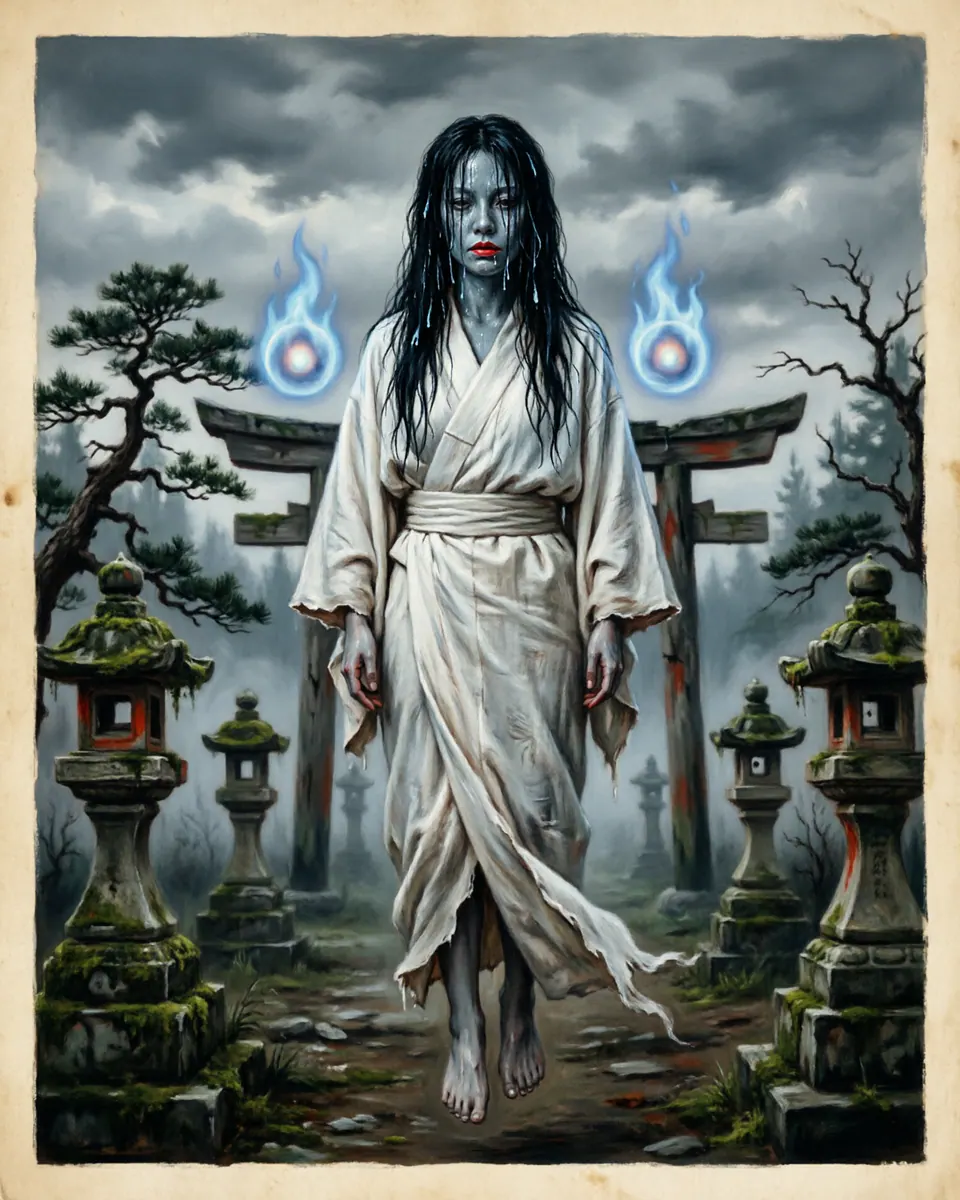
A floating woman with no feet, dressed in a loose white burial kimono (Katabira), her raw black hair falling over her blue-black face, trailed by two blue hitodama (floating fireballs). The image and copy should emphasize the legend's sensory logic: place, sound, light, posture, and the emotional pressure it creates for witnesses.
Reported abilities
- Absolute Curse Spawning
- Reality Distortion around Haunt sites
- Interdimensional Telepathy
Field notes
The most famous is Oiwa, whose mutated, poisoned face inspired Kabuki theatre and modern horror icons like Sadako ('The Ring'). Yūrei cannot be killed; only put to peace by resolving their core legal or romantic grievance. Spirit traditions are treated as place-bound memory and moral warning, so the atlas distinguishes the apparition from ordinary animals or costumed people.
Related traditions
The absolute peak of artistic ghost storytelling, sharing wailing grief patterns with La Llorona and Banshees. The comparison is motif-based rather than a claim of direct borrowing: it links Yūrei to related beings through haunting, road danger, unfinished grief, ominous sound, and the way a location becomes charged by repeated storytelling, while preserving its local name, place, and cultural function.