Banshee (Bean Sídhe) Legend, Origin and Folklore | Tabula Supernaturalis
Banshee (Bean Sídhe) is catalogued under Spirits, Ghosts & Demons from County Kerry, Ireland. Read origin, appearance, sightings, cultural cousins, and...
Origin and tradition
Gaelic tribal structure where a spectral fairy woman belongs to the five ancient bloodlines (O'Grady, O'Neill, O'Brien, O'Connor, Kavanagh), wailing to warn of standard family deaths. This atlas keeps the older tradition separate from later reports: it locates the legend in County Kerry, Ireland, and treats sightings as evidence of transmission rather than proof of a verified creature.
Appearance
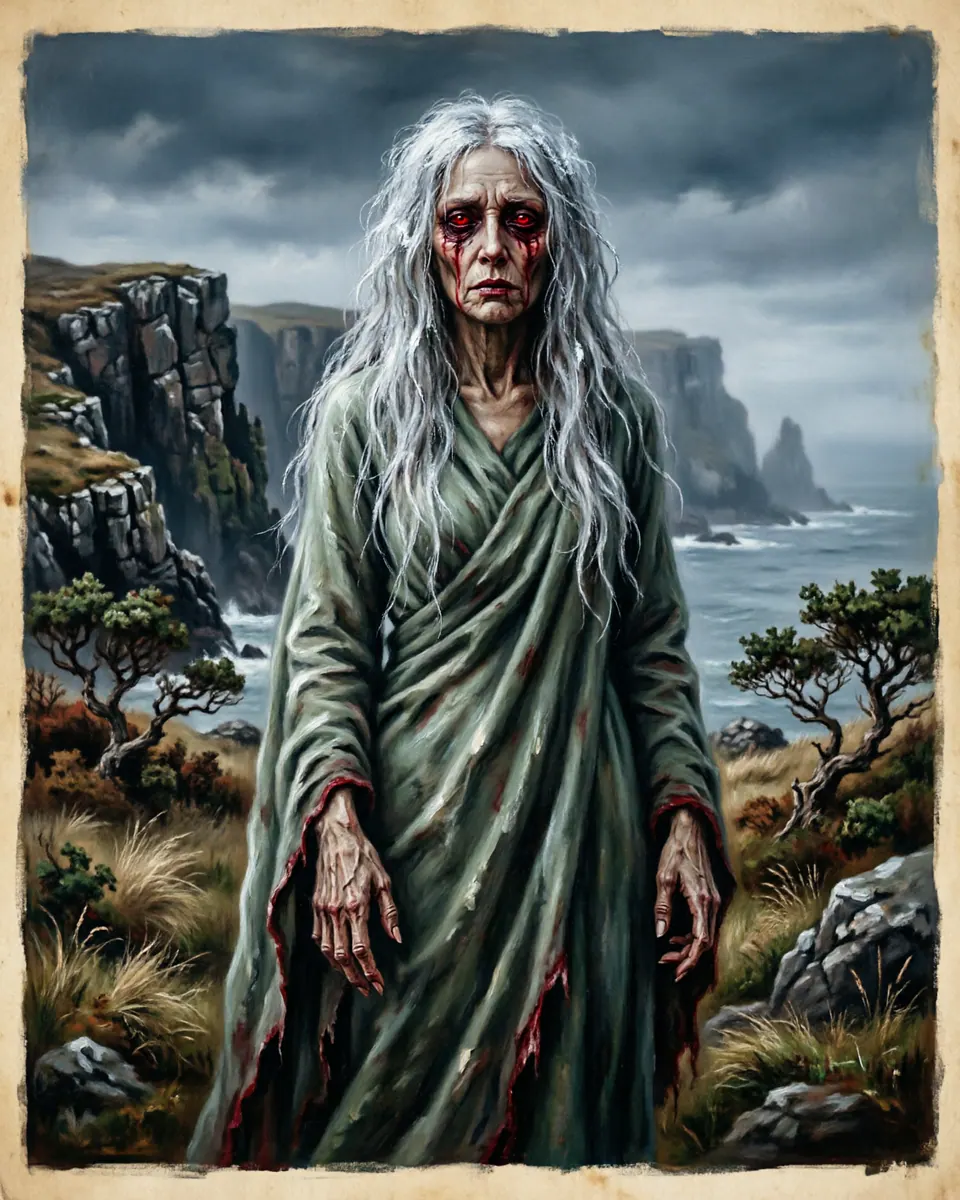
A gaunt ghost wearing a shimmering gray or emerald shroud cloak, with long silver hair, hollow tear-scalded crimson eyes, and bony fingers. The image and copy should emphasize the legend's sensory logic: place, sound, light, posture, and the emotional pressure it creates for witnesses.
Reported abilities
- Lethal Sonic Banshee Wail
- Involuntary Clairsentience
- Levitation across Moor Bogs
Field notes
To find a comb of silver on the ground is an omen of doom: if you pick up the Banshee's comb, she will pursue your family line with endless bad luck. Spirit traditions are treated as place-bound memory and moral warning, so the atlas distinguishes the apparition from ordinary animals or costumed people.
Related traditions
Corresponds directly with Mexico's La Llorona (Weeping Woman) and Japan's Yūrei, whose grief manifests as a supernatural distress call. The comparison is motif-based rather than a claim of direct borrowing: it links Banshee (Bean Sídhe) to related beings through haunting, road danger, unfinished grief, ominous sound, and the way a location becomes charged by repeated storytelling, while preserving its local name, place, and cultural function.