Tomte / Nisse Legend, Origin and Folklore | Tabula Supernaturalis
Tomte / Nisse is catalogued under Fae & Little Folk from Nordic Farmsteads, Sweden / Norway. Read origin, appearance, sightings, cultural cousins, and...
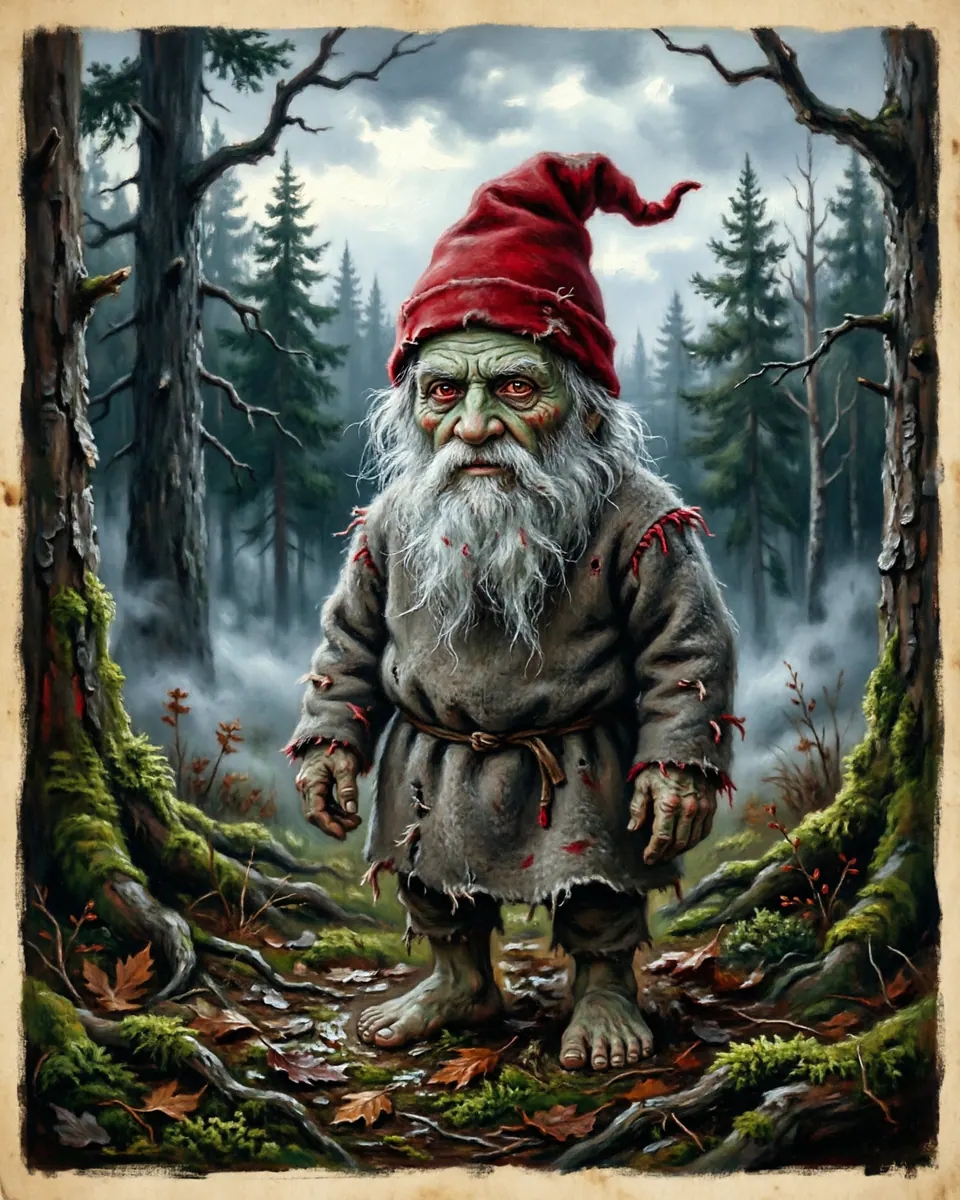
Origin and tradition
Scandinavian agrarian folklore. The spirit of the first clearing farmer who built the farm's cornerstone log. This atlas keeps the older tradition separate from later reports: it locates the legend in Nordic Farmsteads, Sweden / Norway, and treats sightings as evidence of transmission rather than proof of a verified creature.
Appearance
An old man standing no taller than 3 feet, with a long white beard, wearing a gray home-spun woolen tunic and a red pointed cap. The creature should read as small or uncanny through scale, clothing, tools, footprints, and boundary spaces such as houses, fields, trees, or stones.
Reported abilities
- Livestock Protection
- Invisibility Spell
- Extreme Strengths (lifting cows)
Field notes
To ensure the farm's prosperity, families must offer the Tomte a bowl of buttered porridge on Christmas Eve. Failing to add butter is seen as an extreme insult that leads to broken farm equipment. Little-folk traditions often work like rules for living with a landscape or household, so the atlas emphasizes bargains, offerings, tricks, and respect for boundaries.
Related traditions
The Scandinavian analogue to Russia's Domovoi, guarding livestock and demanding specific holiday sacrifices. The comparison is motif-based rather than a claim of direct borrowing: it links Tomte / Nisse to related beings through trickster rules, miniature scale, domestic or field boundaries, offerings, hidden labor, and the uncertainty between helper and threat, while preserving its local name, place, and cultural function.