Leprechaun Legend, Origin and Folklore | Tabula Supernaturalis
Leprechaun is catalogued under Fae & Little Folk from County Galway, Ireland. Read origin, appearance, sightings, cultural cousins, and source notes.
Origin and tradition
First recorded in medieval text 'Echtra Chobil' (The Adventure of Fergus) as tiny sea-dwellers. Later evolved into skilled fairy cobblers. This atlas keeps the older tradition separate from later reports: it locates the legend in County Galway, Ireland, and treats sightings as evidence of transmission rather than proof of a verified creature.
Appearance
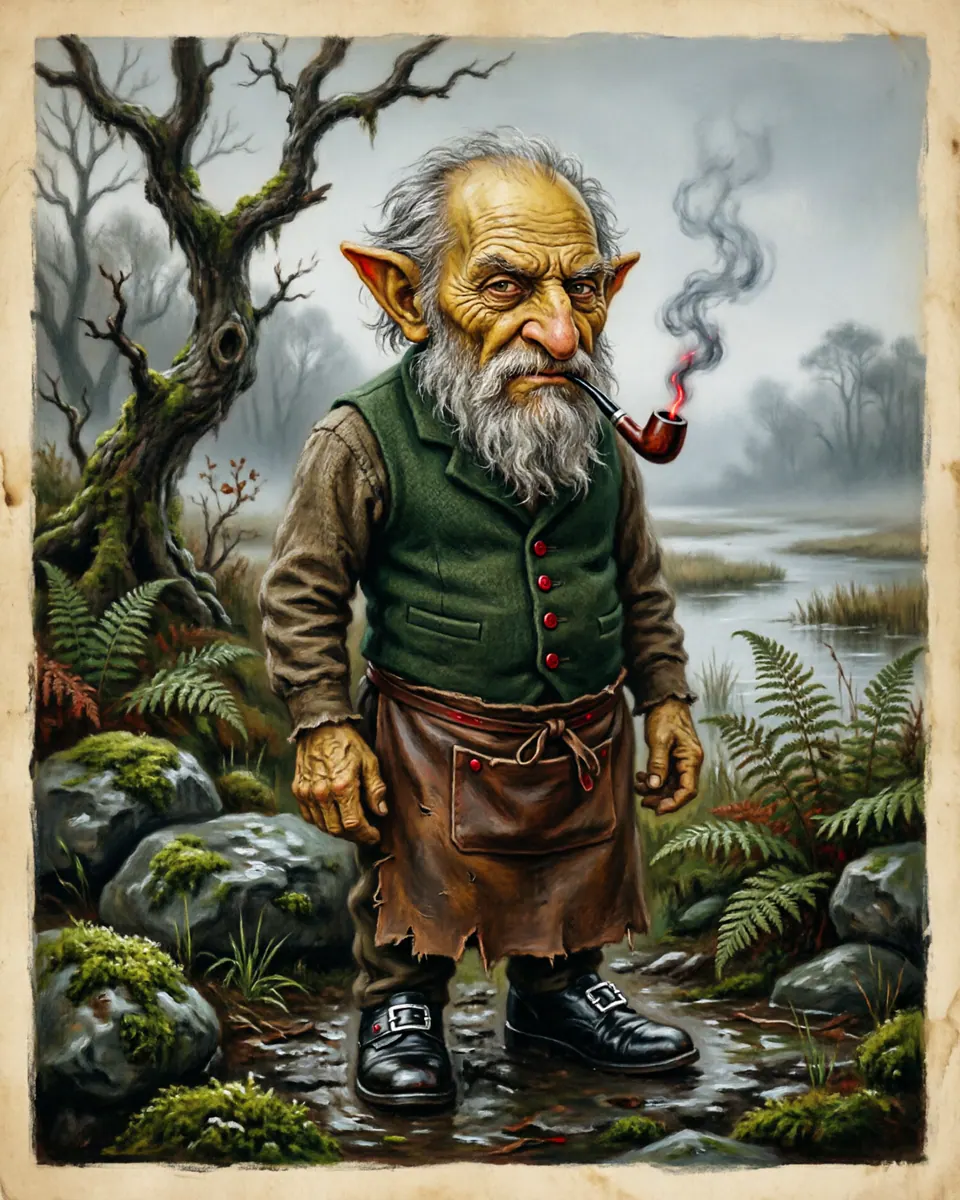
A miniature old gentleman wearing an emerald wool vest, silver-buckled shoes, and a leather apron, smoking a clay pipe. The creature should read as small or uncanny through scale, clothing, tools, footprints, and boundary spaces such as houses, fields, trees, or stones.
Reported abilities
- Inexhaustible Gold Pot Summoning
- Instant Illusion Teleportation
- Absolute Riddling Speech
Field notes
If captured by a human, a Leprechaun must grant three wishes in exchange for his freedom. They are highly untrustworthy and will formulate verbal loops to invalidate wishes. Little-folk traditions often work like rules for living with a landscape or household, so the atlas emphasizes bargains, offerings, tricks, and respect for boundaries.
Related traditions
The absolute standard of small tricksters, comparable to Spain's Duende and Russia's household Domovoi. The comparison is motif-based rather than a claim of direct borrowing: it links Leprechaun to related beings through trickster rules, miniature scale, domestic or field boundaries, offerings, hidden labor, and the uncertainty between helper and threat, while preserving its local name, place, and cultural function.