Pocong (Shroud Ghost) Legend, Origin and Folklore | Tabula Supernaturalis
Pocong (Shroud Ghost) is catalogued under Spirits, Ghosts & Demons from Java Highlands, Indonesia. Read origin, appearance, sightings, cultural cousins, and...
Origin and tradition
Islamic burial traditions where dead bodies are wrapped in white canvas shrouds (Kafan). If the cord tying the head is left bound for 40 days, the soul hops from the grave. This atlas keeps the older tradition separate from later reports: it locates the legend in Java Highlands, Indonesia, and treats sightings as evidence of transmission rather than proof of a verified creature.
Appearance
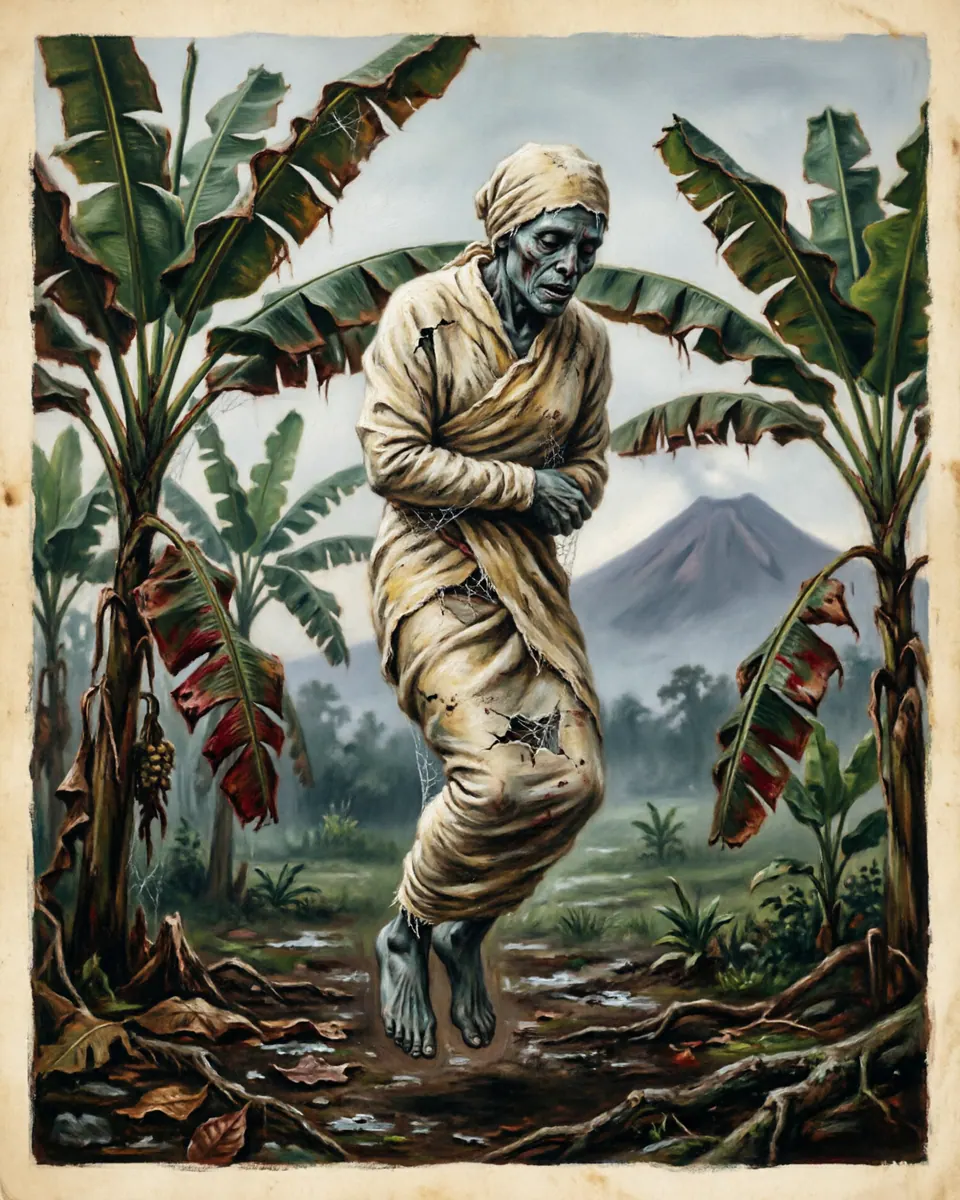
A stiff corpse wrapped in white canvas sheets, looking dusty and decayed, hopping rapidly or floating silently across banana groves. The image and copy should emphasize the legend's sensory logic: place, sound, light, posture, and the emotional pressure it creates for witnesses.
Reported abilities
- Spatial Teleportation
- Paralyzing Gaze
- Mud Sliding Propulsion
Field notes
To free a Pocong, a brave human must untie the knot on top of its head, which releases the lingering soul back into the spiritual celestial layers. Spirit traditions are treated as place-bound memory and moral warning, so the atlas distinguishes the apparition from ordinary animals or costumed people.
Related traditions
A Chinese Jiangshi equivalent (due to the rigid, hopping style) but strictly spiritual and tied to Islamic funerary customs. The comparison is motif-based rather than a claim of direct borrowing: it links Pocong (Shroud Ghost) to related beings through haunting, road danger, unfinished grief, ominous sound, and the way a location becomes charged by repeated storytelling, while preserving its local name, place, and cultural function.