Pishtaco Legend, Origin and Folklore | Tabula Supernaturalis
Pishtaco is catalogued under Vampires & Blood-Drinkers from Andean Highlands, Peru. Read origin, appearance, sightings, cultural cousins, and source notes.
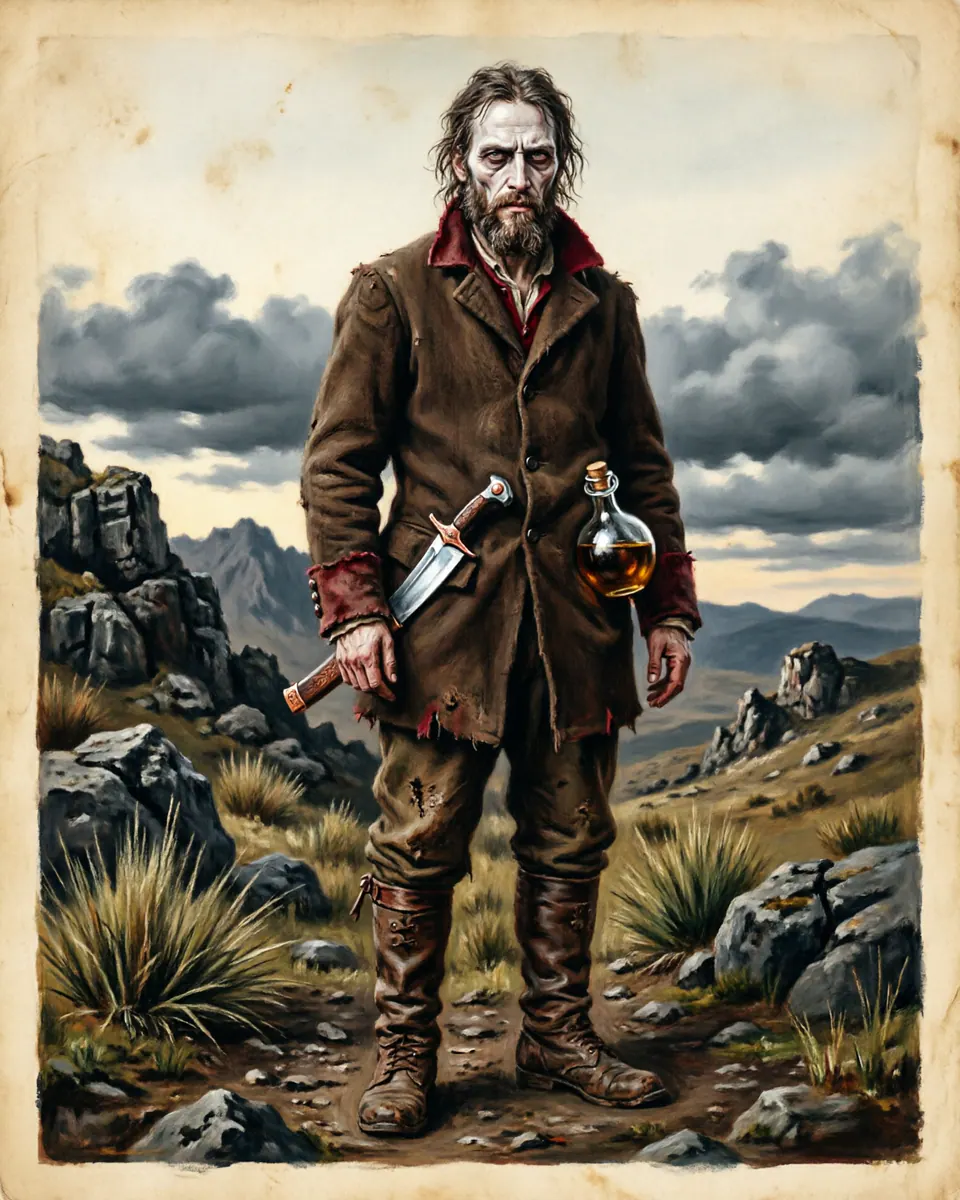
Origin and tradition
Andean folklore describes a dangerous stranger or predatory figure who extracts human fat, often reflecting colonial violence and exploitation fears. This atlas keeps the older tradition separate from later reports: it locates the legend in Andean Highlands, Peru, and treats sightings as evidence of transmission rather than proof of a verified creature.
Appearance
A pale outsider or traveler with knives, bottles, or hidden tools, less monstrous in face than in the harvest he seeks. The anatomy should show its night-feeding role through eyes, mouth, claws, posture, or separated body form without relying on graphic violence.
Reported abilities
- Fat Extraction
- Predatory Disguise
- Roadside Ambush
Field notes
Pishtaco is one of the atlas's clearest examples of folklore encoding historical power, resource extraction, and bodily fear. Blood-drinker legends often encode illness, predation, and nighttime vulnerability; the atlas keeps those motifs visible while avoiding sensational claims.
Related traditions
An Andean extraction-vampire cousin to Chupacabra and Strigoi, but centered on fat rather than blood. The comparison is motif-based rather than a claim of direct borrowing: it links Pishtaco to related beings through night feeding, bodily separation, predatory hunger, contagious fear, and the household rituals used to recognize or repel a hidden predator, while preserving its local name, place, and cultural function.