Strigoi / Dracula Legend, Origin and Folklore | Tabula Supernaturalis
Strigoi / Dracula is catalogued under Vampires & Blood-Drinkers from Transylvanian Alps, Romania. Read origin, appearance, sightings, cultural cousins, and...
Origin and tradition
Dacian folklore of troubled souls who do not cross the river Styx: particularly red-haired men, or babies born with a caul (sac membrane). This atlas keeps the older tradition separate from later reports: it locates the legend in Transylvanian Alps, Romania, and treats sightings as evidence of transmission rather than proof of a verified creature.
Appearance
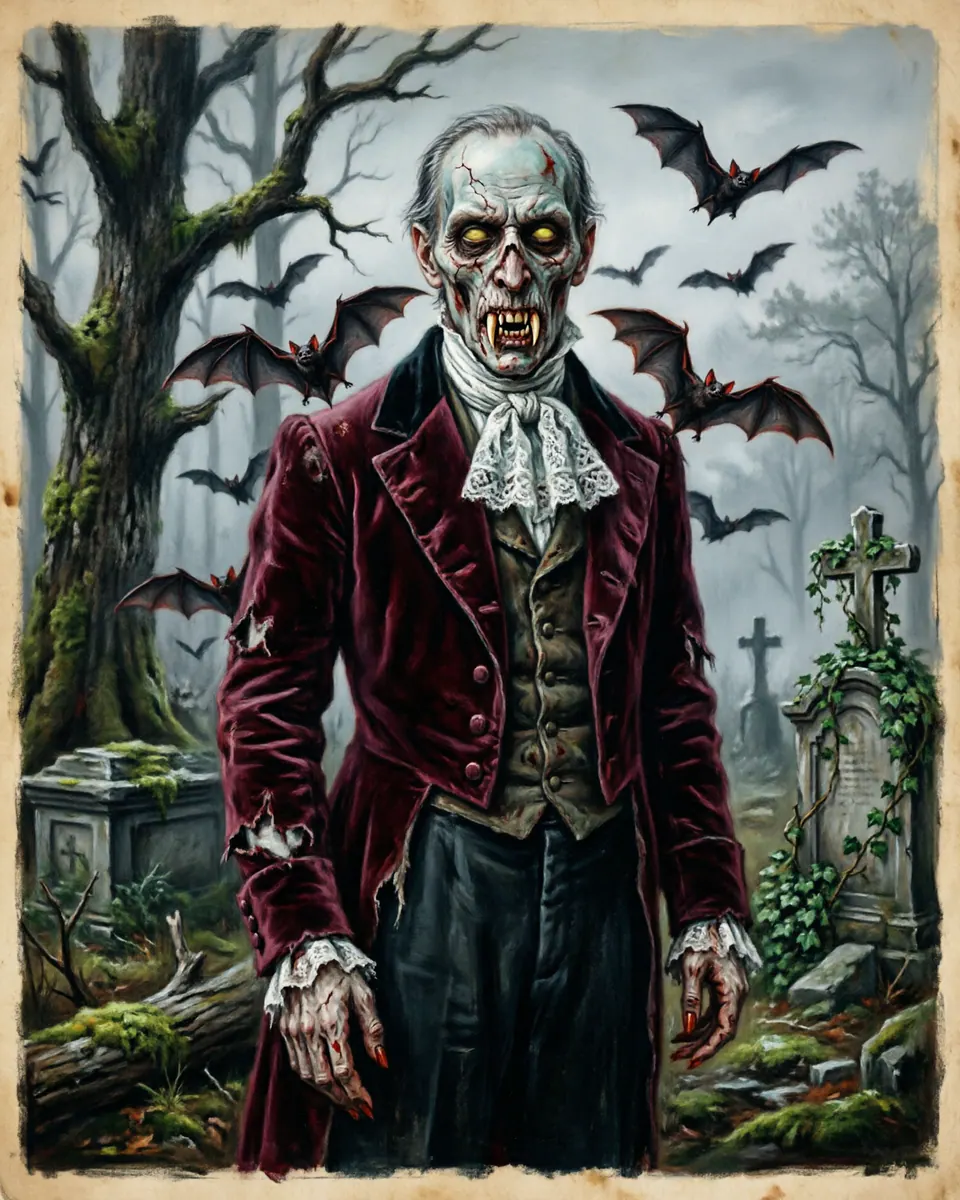
A pale, gaunt aristocrat or rotting corpse with long pointed fangs, carrying the damp smell of graveyard soil, often materializing as a swarm of black bats. The anatomy should show its night-feeding role through eyes, mouth, claws, posture, or separated body form without relying on graphic violence.
Reported abilities
- Fog Summoning
- Mist Morphing
- Wooden Stake Demise
Field notes
Peasants in Sighisoara used a white horse to find Strigoi graves. If the stallion refused to step over a grave mound, the corpse within was dug up, and its heart burned. Blood-drinker legends often encode illness, predation, and nighttime vulnerability; the atlas keeps those motifs visible while avoiding sensational claims.
Related traditions
The absolute standard-bearer of European vampirism, sharing aristocrat shape traits with Greece's Lamia and spectral rot with Germany's Werewolf. The comparison is motif-based rather than a claim of direct borrowing: it links Strigoi / Dracula to related beings through night feeding, bodily separation, predatory hunger, contagious fear, and the household rituals used to recognize or repel a hidden predator, while preserving its local name, place, and cultural function.