El Chupacabra Legend, Origin and Folklore | Tabula Supernaturalis
El Chupacabra is catalogued under Vampires & Blood-Drinkers from Canóvanas Mountains, Puerto Rico. Read origin, appearance, sightings, cultural cousins, and...
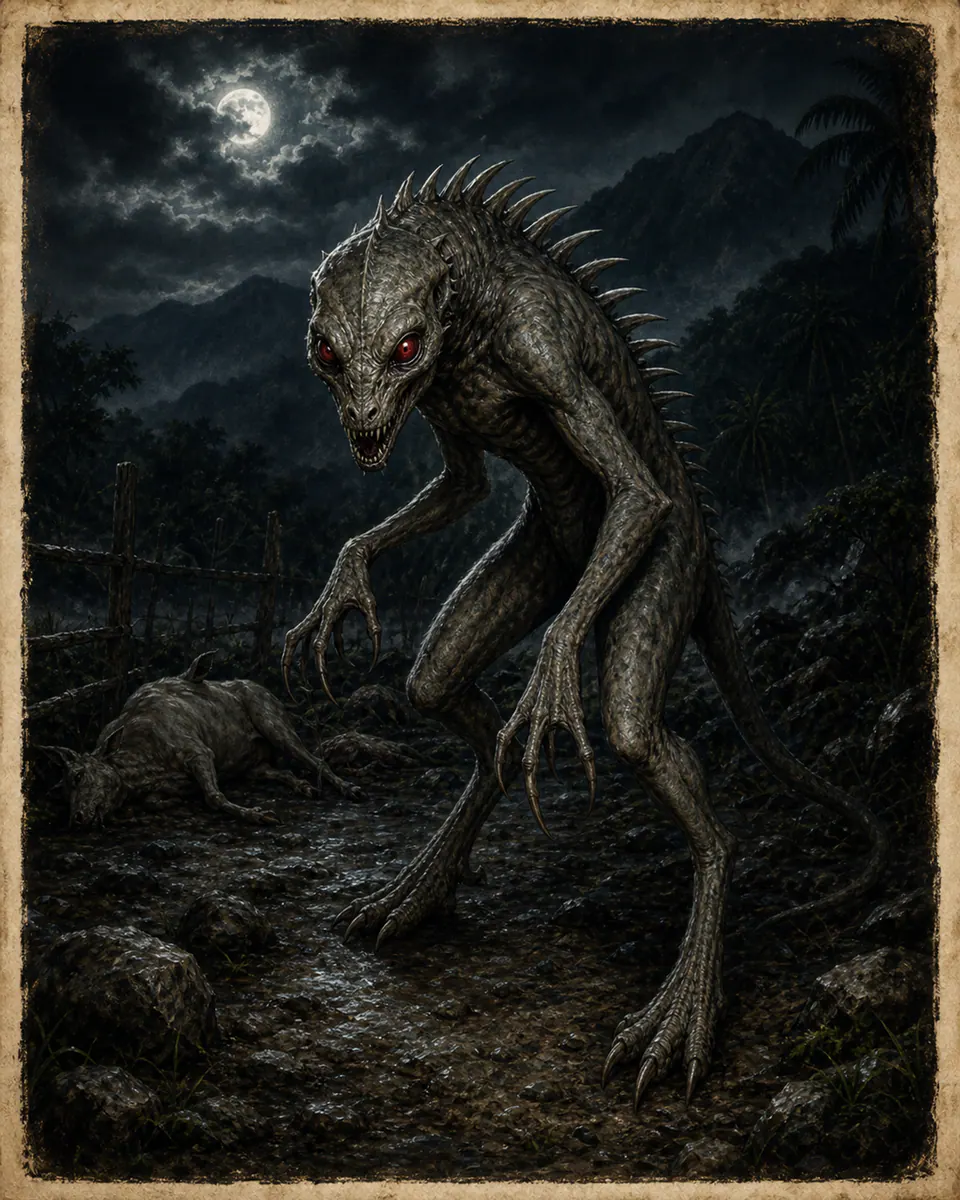
Origin and tradition
First reported in 1995 after eight sheep were found dead with three puncture wounds in their chest and every drop of blood siphoned out. This atlas keeps the older tradition separate from later reports: it locates the legend in Canóvanas Mountains, Puerto Rico, and treats sightings as evidence of transmission rather than proof of a verified creature.
Appearance
A bipedal reptilian lizard-dog standing 3 to 4 feet tall, with large crimson alien-like eyes, leather gray skin, and a row of sharp dorsal spikes. The anatomy should show its night-feeding role through eyes, mouth, claws, posture, or separated body form without relying on graphic violence.
Reported abilities
- Searing Sulfur Odor
- Hypnotic Crimson Eye-flash
- 30-foot Bound Leaping
Field notes
Two broad variants circulate: the Puerto Rican alien-reptoid figure and later hairless-canid reports from Texas and elsewhere. Rumors of experiments, livestock anxiety, and misidentified animals all feed the modern legend. Blood-drinker legends often encode illness, predation, and nighttime vulnerability; the atlas keeps those motifs visible while avoiding sensational claims.
Related traditions
The absolute icon of modern urban cryptid-vampires, crossing animal lycanthropy with post-nuclear grey alien theories. The comparison is motif-based rather than a claim of direct borrowing: it links El Chupacabra to related beings through night feeding, bodily separation, predatory hunger, contagious fear, and the household rituals used to recognize or repel a hidden predator, while preserving its local name, place, and cultural function.