Manananggal Legend, Origin and Folklore | Tabula Supernaturalis
Manananggal is catalogued under Vampires & Blood-Drinkers from Visayas Islands, Philippines. Read origin, appearance, sightings, cultural cousins, and...
Origin and tradition
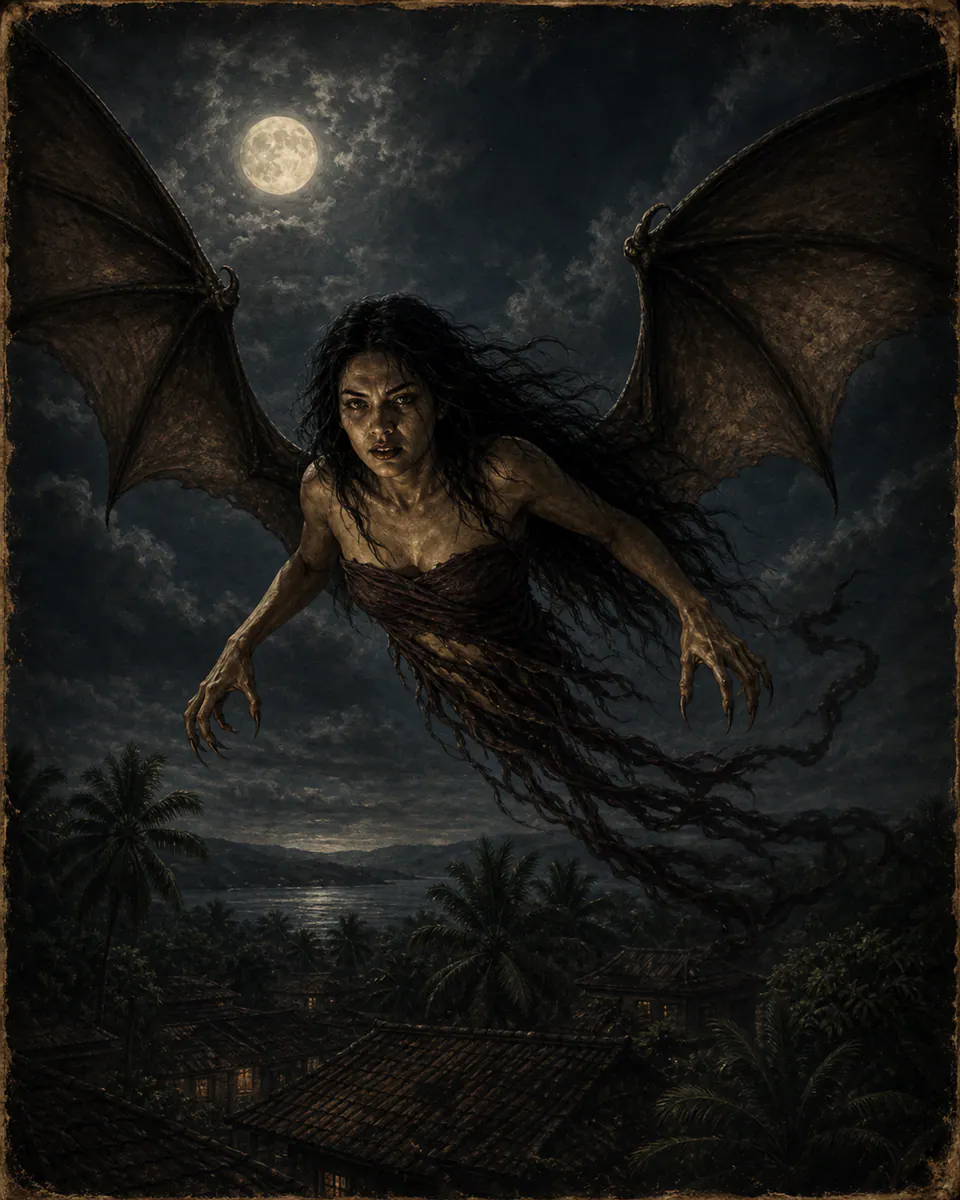
Visayan tribal folklore detailing cursed women who oil their midsections at midnight, allowing their upper torso to sever and grow bat-wings. This atlas keeps the older tradition separate from later reports: it locates the legend in Visayas Islands, Philippines, and treats sightings as evidence of transmission rather than proof of a verified creature.
Appearance
An attractive woman who splits in two at the belly. Her upper half flying with dark leathery bat wings, pulling yards of wet intestines behind her. The anatomy should show its night-feeding role through eyes, mouth, claws, posture, or separated body form without relying on graphic violence.
Reported abilities
- Self-Bisection
- Fetal Heart Siphoning via Tongue
- Salt-Crust Vulnerability
Field notes
To destroy a Manananggal, one must search the nearby forests for her matching severed lower legs and rub salt, ash, or crushed garlic into the open waist joint, preventing reunification before dawn. Blood-drinker legends often encode illness, predation, and nighttime vulnerability; the atlas keeps those motifs visible while avoiding sensational claims.
Related traditions
Directly cousins with Malaysia's Penanggalan (flying head and heart) and the Caribbean's Soucouyant (fireball witch who discards her skin). The comparison is motif-based rather than a claim of direct borrowing: it links Manananggal to related beings through night feeding, bodily separation, predatory hunger, contagious fear, and the household rituals used to recognize or repel a hidden predator, while preserving its local name, place, and cultural function.