Aswang Legend, Origin and Folklore | Tabula Supernaturalis
Aswang is catalogued under Shapeshifters & Lycanthropes from Capiz Province, Philippines. Read origin, appearance, sightings, cultural cousins, and source...
Origin and tradition
Pre-hispanic animism where high-caste witches turned into predatory forest scavengers at sunset through oil rituals. This atlas keeps the older tradition separate from later reports: it locates the legend in Capiz Province, Philippines, and treats sightings as evidence of transmission rather than proof of a verified creature.
Appearance
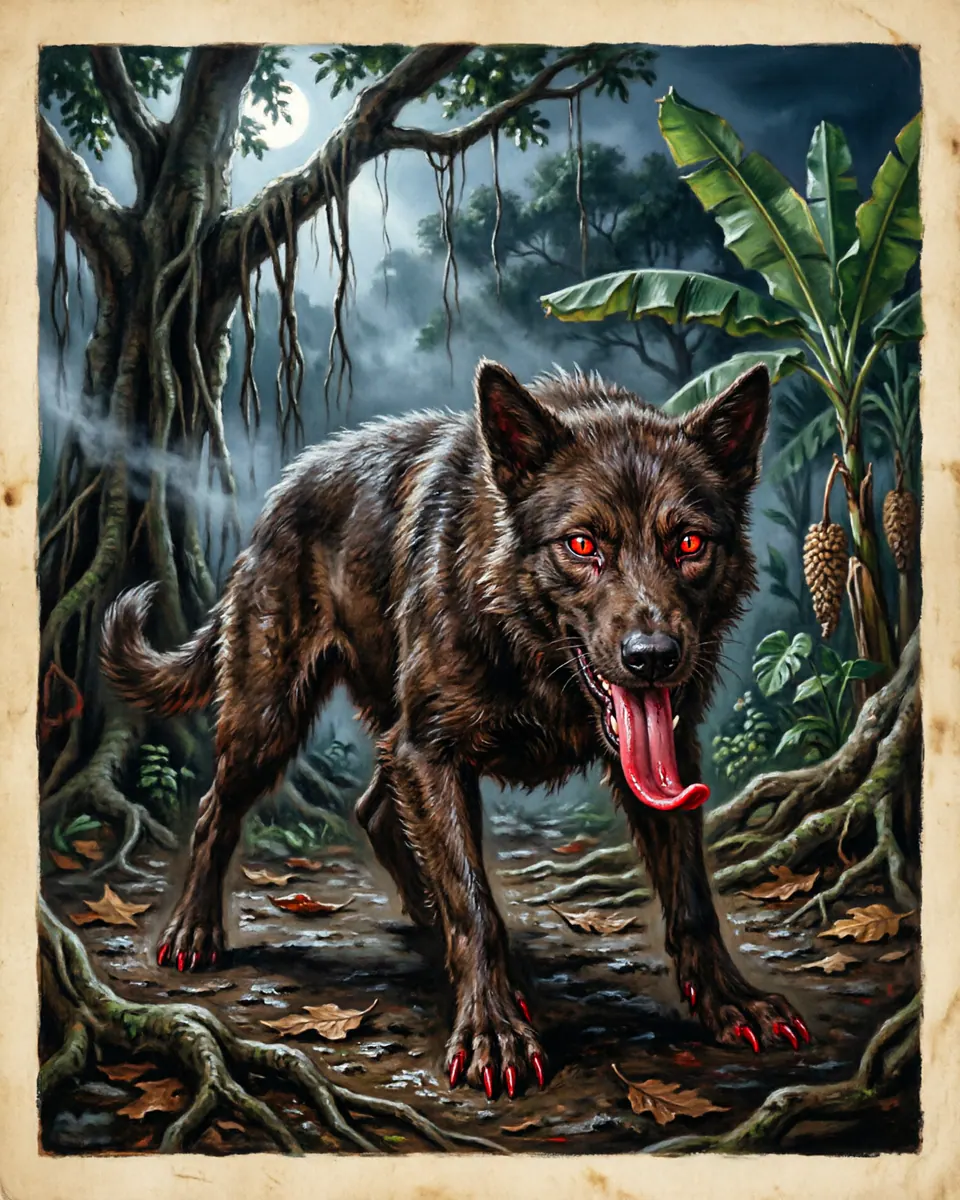
By day, quiet, beautiful townspeople. By night, a long-tongued, red-eyed feral dog, pig, or cat that seeks pregnant prey. The design should preserve the transformation clue, showing the boundary between human, animal, and uncanny form rather than settling on one ordinary body.
Reported abilities
- Proboscis Tongue Injection
- Size-Shifting Footprints
- Garlic Repellent Scenting
Field notes
In Philippine barrios, it is said you can spot an Aswang by looking them in the eye: your reflection inside their iris will appear turned upside down. Shapeshifter entries are read as social warnings as much as monster reports, so the atlas keeps attention on disguise, taboo behavior, and the moment the hidden form breaks through.
Related traditions
Blends the lupine shapeshifting of the Werewolf with the horrific blood-vessel probing of the Manananggal and Penanggalan. The comparison is motif-based rather than a claim of direct borrowing: it links Aswang to related beings through dual identity, forbidden transformation, reversed tracks, animal doubles, and anxieties about neighbors who are not what they appear to be, while preserving its local name, place, and cultural function.