Soucouyant Legend, Origin and Folklore | Tabula Supernaturalis
Soucouyant is catalogued under Vampires & Blood-Drinkers from Caribbean Coast, Trinidad and Tobago. Read origin, appearance, sightings, cultural cousins,...
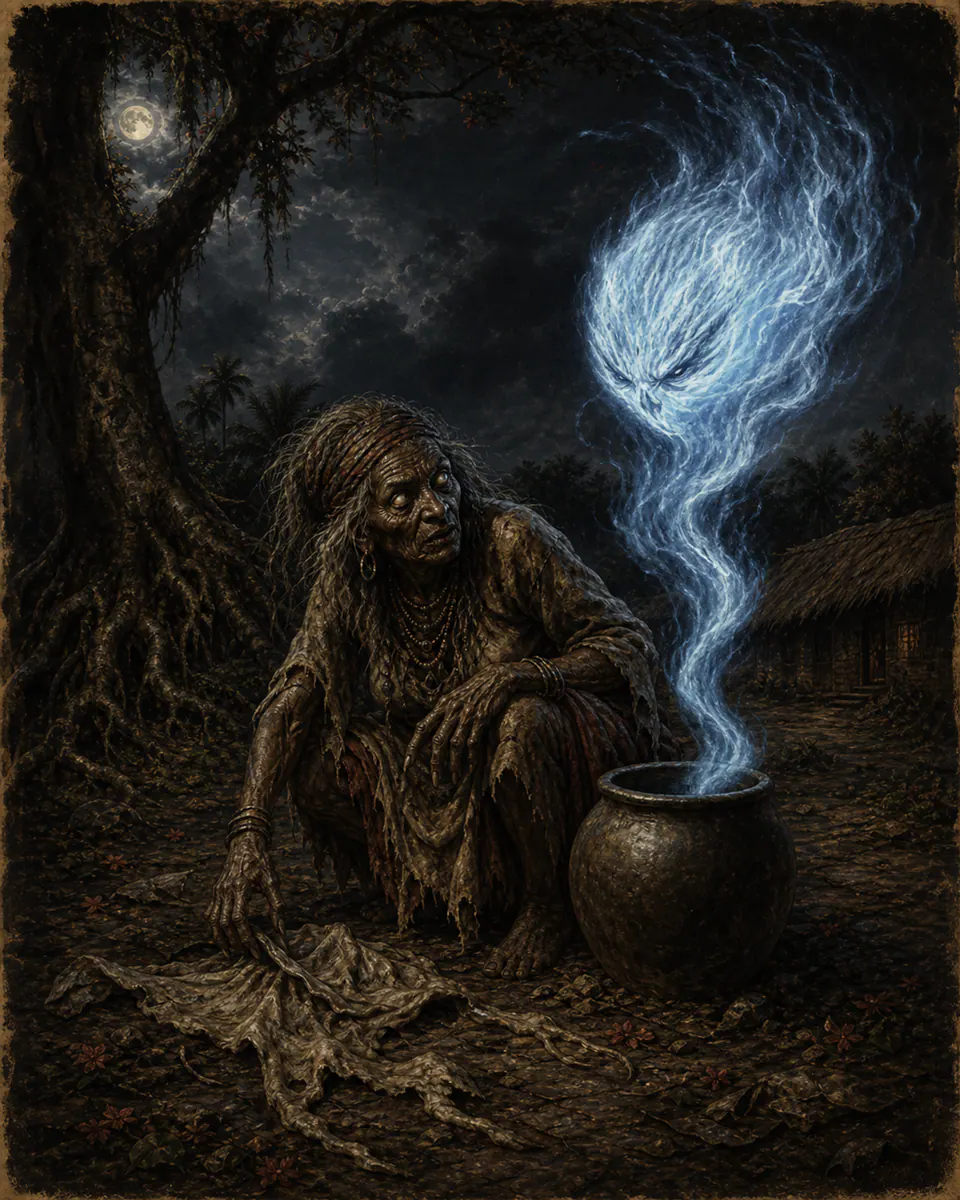
Origin and tradition
West African import lore of the 'Loogaroo' or fire-skin witch who makes blood compacts with the silk-cotton tree spirits. This atlas keeps the older tradition separate from later reports: it locates the legend in Caribbean Coast, Trinidad and Tobago, and treats sightings as evidence of transmission rather than proof of a verified creature.
Appearance
By day, an old wrinkled crone. By night, she sheds her skin into a stone jar, turning into a flying ball of blue-white phosphorus flame. The anatomy should show its night-feeding role through eyes, mouth, claws, posture, or separated body form without relying on graphic violence.
Reported abilities
- Aura Ignition (Fireball form)
- Siphoning Sleeping Humans
- Skin-Stash Vulnerability
Field notes
To defeat a Soucouyant, one must search her cottage for the mortar-and-pestle holding her salty discarded skin and rub coarse rock salt into it. When she returns, the skin will burn her to ash. Blood-drinker legends often encode illness, predation, and nighttime vulnerability; the atlas keeps those motifs visible while avoiding sensational claims.
Related traditions
Directly descendant from the skin-shedding and blood-sucking witches of West Africa, mirroring the Philippines' Manananggal. The comparison is motif-based rather than a claim of direct borrowing: it links Soucouyant to related beings through night feeding, bodily separation, predatory hunger, contagious fear, and the household rituals used to recognize or repel a hidden predator, while preserving its local name, place, and cultural function.