Ghoul Legend, Origin and Folklore | Tabula Supernaturalis
Ghoul is catalogued under Vampires & Blood-Drinkers from Arabian Grave Roads, Middle East. Read origin, appearance, sightings, cultural cousins, and source...
Origin and tradition
Arabic folklore describes ghouls as desert or graveyard beings that prey on travelers and the dead. This atlas keeps the older tradition separate from later reports: it locates the legend in Arabian Grave Roads, Middle East, and treats sightings as evidence of transmission rather than proof of a verified creature.
Appearance
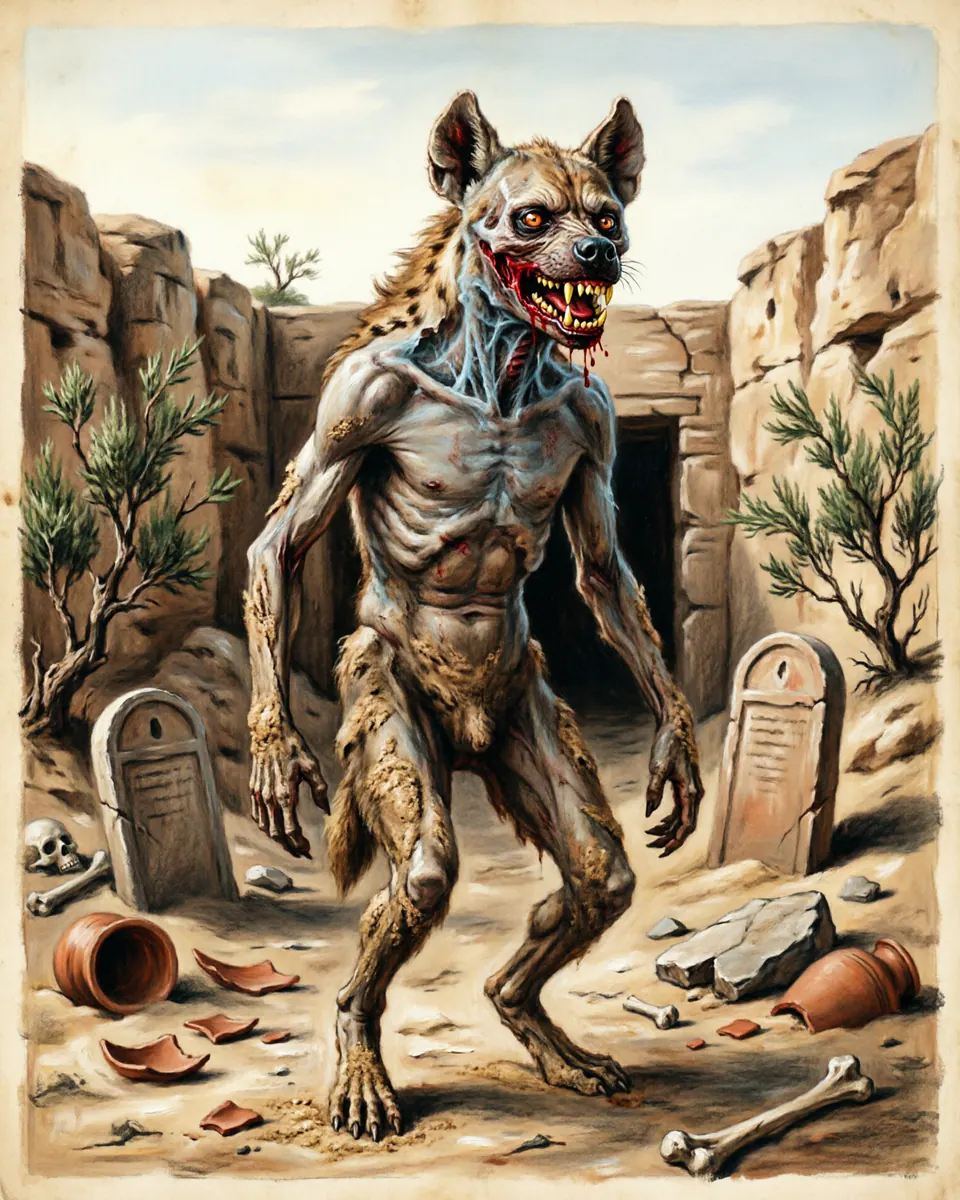
A lean corpse-eater with sand-caked limbs, a hyena-like grin, and the ability to borrow a human face. The anatomy should show its night-feeding role through eyes, mouth, claws, posture, or separated body form without relying on graphic violence.
Reported abilities
- Corpse Feeding
- Traveler Lure
- Shifting Voice
Field notes
The Ghoul is less noble than the Ifrit and less vast than the Marid. Its terror is hunger, disguise, and the isolation of the road. Blood-drinker legends often encode illness, predation, and nighttime vulnerability; the atlas keeps those motifs visible while avoiding sensational claims.
Related traditions
A grave-hunger cousin to Pishtaco and Strigoi, but rooted in desert travel and burial anxiety. The comparison is motif-based rather than a claim of direct borrowing: it links Ghoul to related beings through night feeding, bodily separation, predatory hunger, contagious fear, and the household rituals used to recognize or repel a hidden predator, while preserving its local name, place, and cultural function.