Jinn / Genie Legend, Origin and Folklore | Tabula Supernaturalis
Jinn / Genie is catalogued under Spirits, Ghosts & Demons from Rub' al Khali Desert, Saudi Arabia / Yemen. Read origin, appearance, sightings, cultural...
Origin and tradition
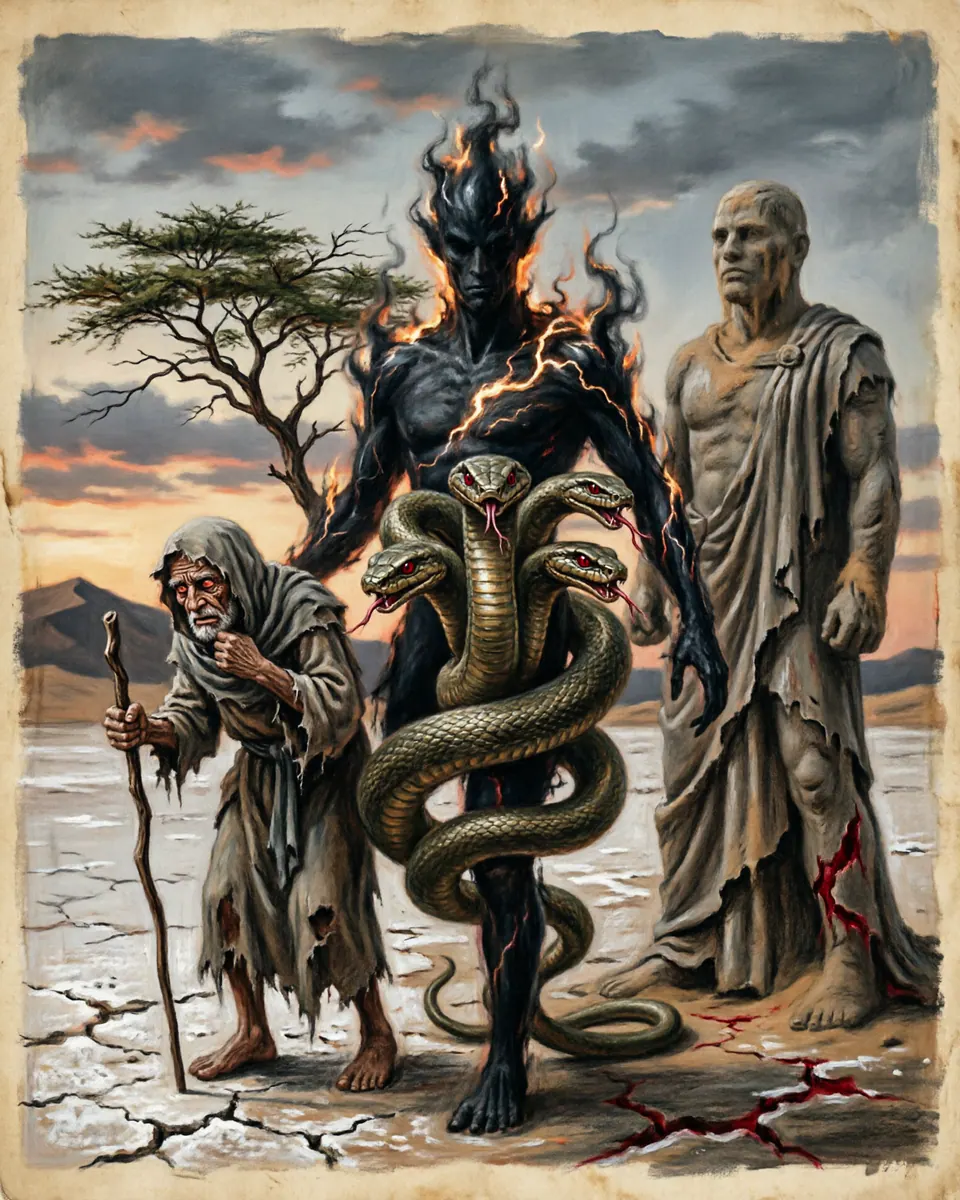
Islamic theology stating Allah created three rational orders: Angels from light, Jinn from smokeless fire, and Humans from clay. This atlas keeps the older tradition separate from later reports: it locates the legend in Rub' al Khali Desert, Saudi Arabia / Yemen, and treats sightings as evidence of transmission rather than proof of a verified creature.
Appearance
A shape of shifting smokeless fire or black lightning, capable of manifesting as an old beggar, a multi-headed serpent, or a majestic colossus. The image and copy should emphasize the legend's sensory logic: place, sound, light, posture, and the emotional pressure it creates for witnesses.
Reported abilities
- Cosmic Wish Manipulation
- Morphic Illusion Generation
- Iron-Binding Vulnerability
Field notes
Jinn are divided into tribes: the massive Marid, the fiery Ifrit, and the scavenger Ghul. They live in parallel dimensions and are highly vulnerable to iron and holy salt. Spirit traditions are treated as place-bound memory and moral warning, so the atlas distinguishes the apparition from ordinary animals or costumed people.
Related traditions
A powerful, complex elemental class like Japan's spiritual Umibōzu, existing alongside humanity rather than as a biological cryptid. The comparison is motif-based rather than a claim of direct borrowing: it links Jinn / Genie to related beings through haunting, road danger, unfinished grief, ominous sound, and the way a location becomes charged by repeated storytelling, while preserving its local name, place, and cultural function.