Baba Yaga Legend, Origin and Folklore | Tabula Supernaturalis
Baba Yaga is catalogued under Spirits, Ghosts & Demons from Siberian Forests, Russia / Slavic lands. Read origin, appearance, sightings, cultural cousins,...
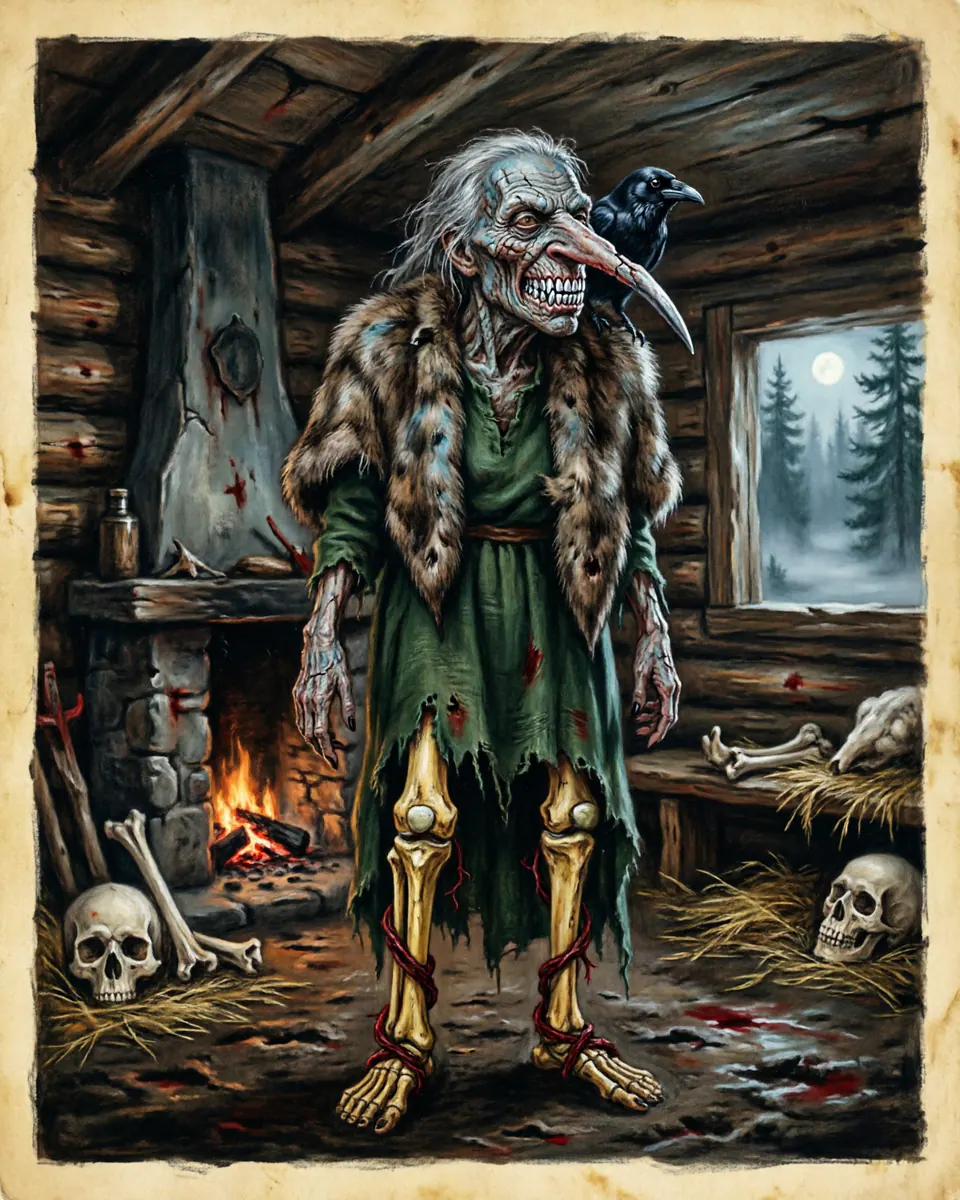
Origin and tradition
Slavic chronicles from the 12th century recording a wild bone-legged forest grandmother who controls nature's days and nights. This atlas keeps the older tradition separate from later reports: it locates the legend in Siberian Forests, Russia / Slavic lands, and treats sightings as evidence of transmission rather than proof of a verified creature.
Appearance
A mutated old witch with a nose so long it touches her ceiling, a silver row of iron teeth, and legs made of dry human bones. The image and copy should emphasize the legend's sensory logic: place, sound, light, posture, and the emotional pressure it creates for witnesses.
Reported abilities
- Mortar & Pestle Flight
- A Cabin that Walks on Giant Chicken Legs
- Broomstick Trail Erasure
Field notes
Her deep forest cabin is fenced with human skulls whose empty eye sockets glow with magical blue fire at dark. She doesn't seek victims, but will cook and eat any traveler foolish enough to fail her riddle trials. Spirit traditions are treated as place-bound memory and moral warning, so the atlas distinguishes the apparition from ordinary animals or costumed people.
Related traditions
The absolute standard for Eastern European forest sorcery, displaying deep nature trickery like Ireland's Fae/Banshee and Latin America's Duende. The comparison is motif-based rather than a claim of direct borrowing: it links Baba Yaga to related beings through haunting, road danger, unfinished grief, ominous sound, and the way a location becomes charged by repeated storytelling, while preserving its local name, place, and cultural function.