European Dragon Legend, Origin and Folklore | Tabula Supernaturalis
European Dragon is catalogued under Dragons & Sea Serpents from Alpine and Rhine Traditions, Germany / Central Europe. Read origin, appearance, sightings,...
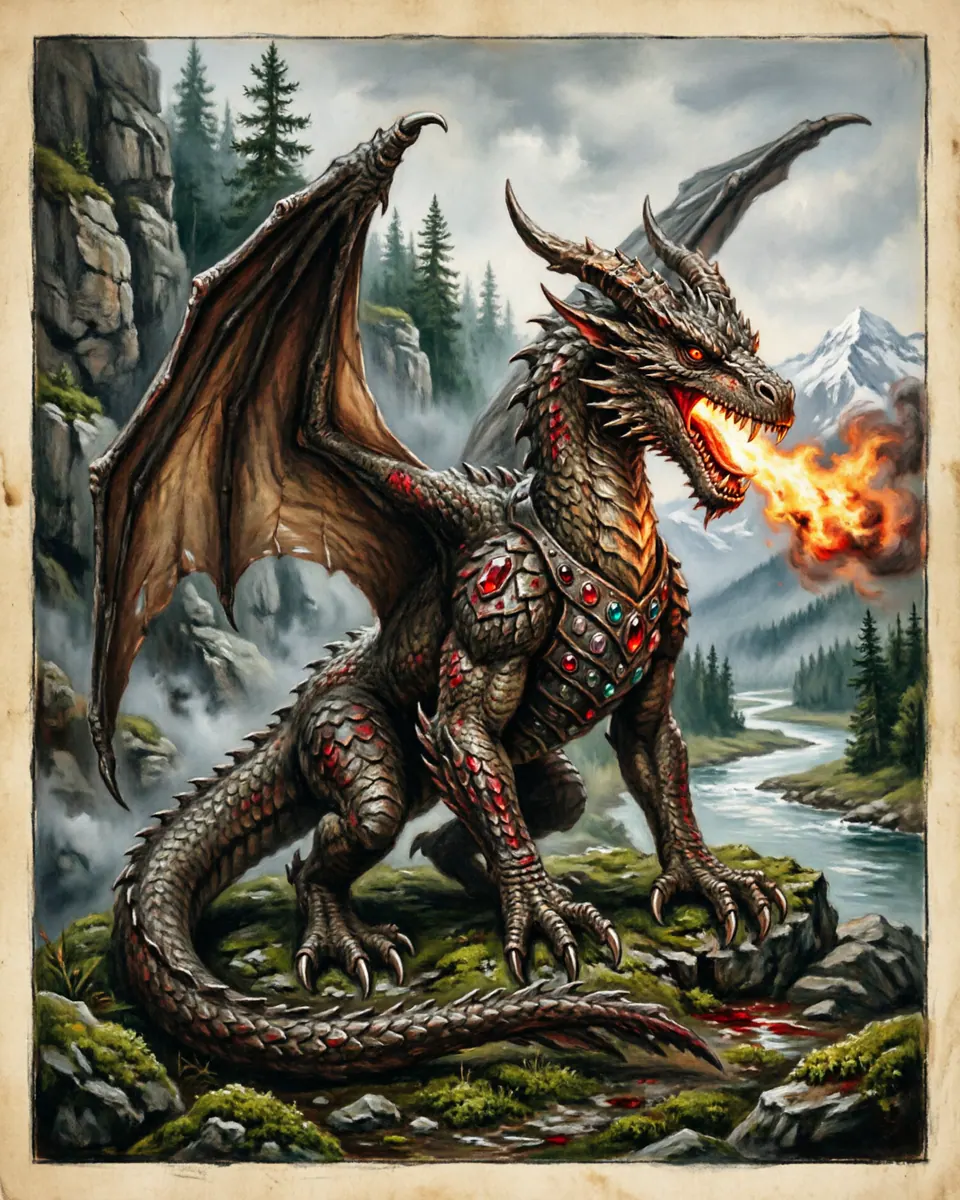
Origin and tradition
Medieval European legends describe treasure-hoarding dragons slain by saints, knights, or culture heroes, often as symbols of chaos at the edge of settlement. This atlas keeps the older tradition separate from later reports: it locates the legend in Alpine and Rhine Traditions, Germany / Central Europe, and treats sightings as evidence of transmission rather than proof of a verified creature.
Appearance
A vast scaled reptile with bat wings, horns, claws, furnace breath, and a belly armored by gemstones or iron-hard plates. The body plan should keep the legendary signature clear, whether serpent, bird, hybrid, or scaled guardian, with scale cues that separate it from a normal animal.
Reported abilities
- Fire Breath
- Treasure Hoard Curse
- Armored Flight
Field notes
This entry fills the western dragon archetype that Lindworm and Quetzalcoatl contrast against: winged, hoarding, and knight-facing. Dragon and great-serpent traditions often carry political, elemental, or cosmological meaning, so size, habitat, and symbolic function matter as much as anatomy.
Related traditions
The western counterpart to Chinese Dragon and Quetzalcoatl, but with a stronger monster-slaying and treasure-hoard pattern. The comparison is motif-based rather than a claim of direct borrowing: it links European Dragon to related beings through colossal scale, elemental force, guarded treasure or thresholds, serpent motion, wings or horns, and the old idea that landscape itself can become animate, while preserving its local name, place, and cultural function.