Almas Legend, Origin and Folklore | Tabula Supernaturalis
Almas is catalogued under Humanoid Cryptids from Altai Mountains, Mongolia. Read origin, appearance, sightings, cultural cousins, and source notes.
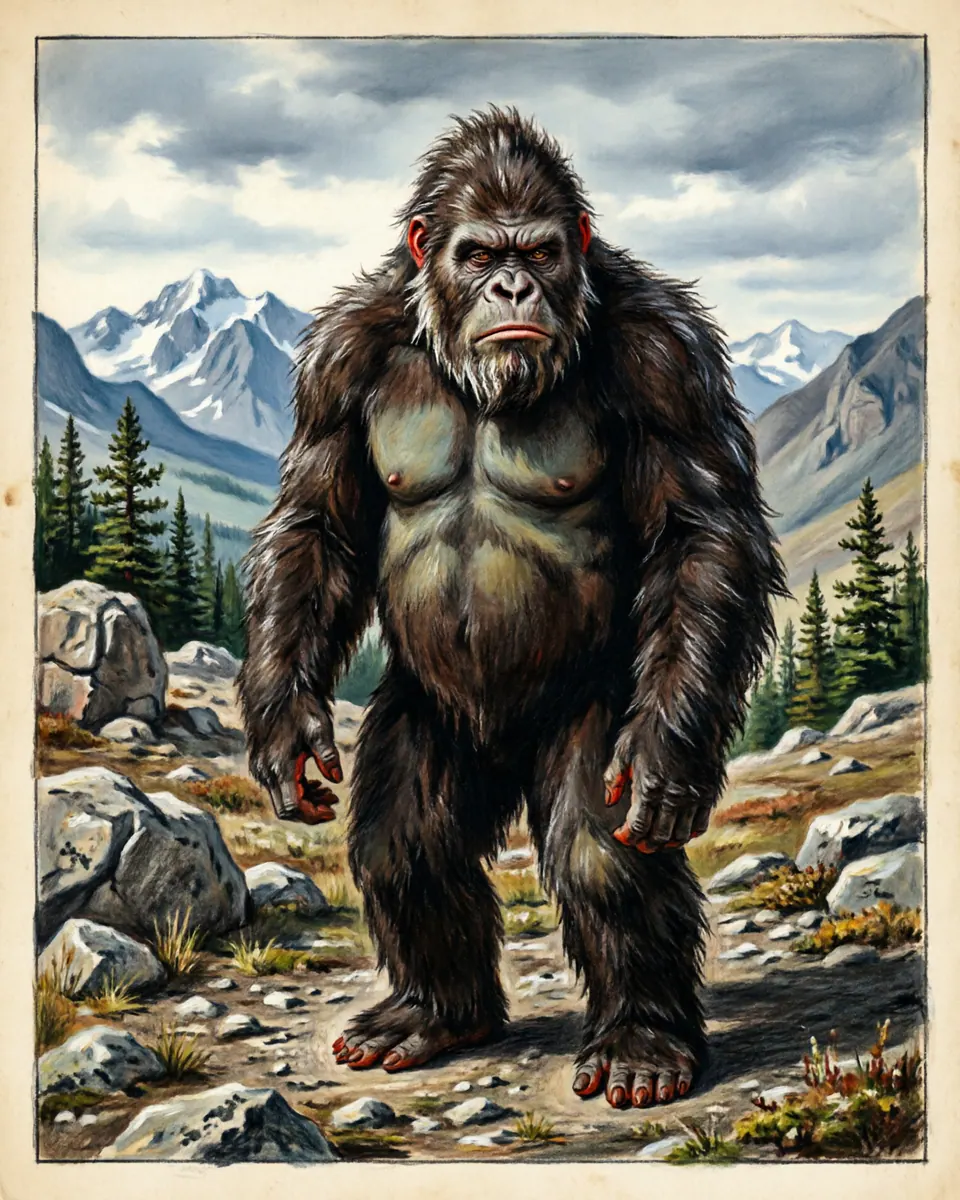
Origin and tradition
First noted by Bavarian traveler Hans Schiltberger in 1427, who was captured by Mongol khans and saw 'shaggy wild people who eat leaves.'. This atlas keeps the older tradition separate from later reports: it locates the legend in Altai Mountains, Mongolia, and treats sightings as evidence of transmission rather than proof of a verified creature.
Appearance
Slightly shorter and more human-like than Bigfoot, with dark hairy coats, prominent brow ridges, flat noses, and a total lack of human speech. The silhouette should stress posture, gait, hair or skin texture, and terrain clues rather than turning the being into a generic human or ape.
Reported abilities
- Survival in Mountain Steppes
- Extreme Barefoot Running Speed
- Basic Tool Crafting
Field notes
Cryptozoologists suggest the Almas is a relic population of Neanderthals or Denisovans who survived the ice age by retreating into the massive, empty Siberian-Mongolian borders. Humanoid cryptid reports are strongest when the copy separates footprint lore, wilderness fear, and local naming from claims of a confirmed species.
Related traditions
The evolutionary bridging link between Bigfoot and late Neanderthals, living in the extreme cold deserts of Central Asia. The comparison is motif-based rather than a claim of direct borrowing: it links Almas to related beings through wild-person traditions, marginal landscapes, strange tracks, nocturnal calls, and the fear that something near-human lives just outside settlement, while preserving its local name, place, and cultural function.