Sphinx Legend, Origin and Folklore | Tabula Supernaturalis
Sphinx is catalogued under Spirits, Ghosts & Demons from Egyptian and Greek Thresholds, Egypt / Greece. Read origin, appearance, sightings, cultural...
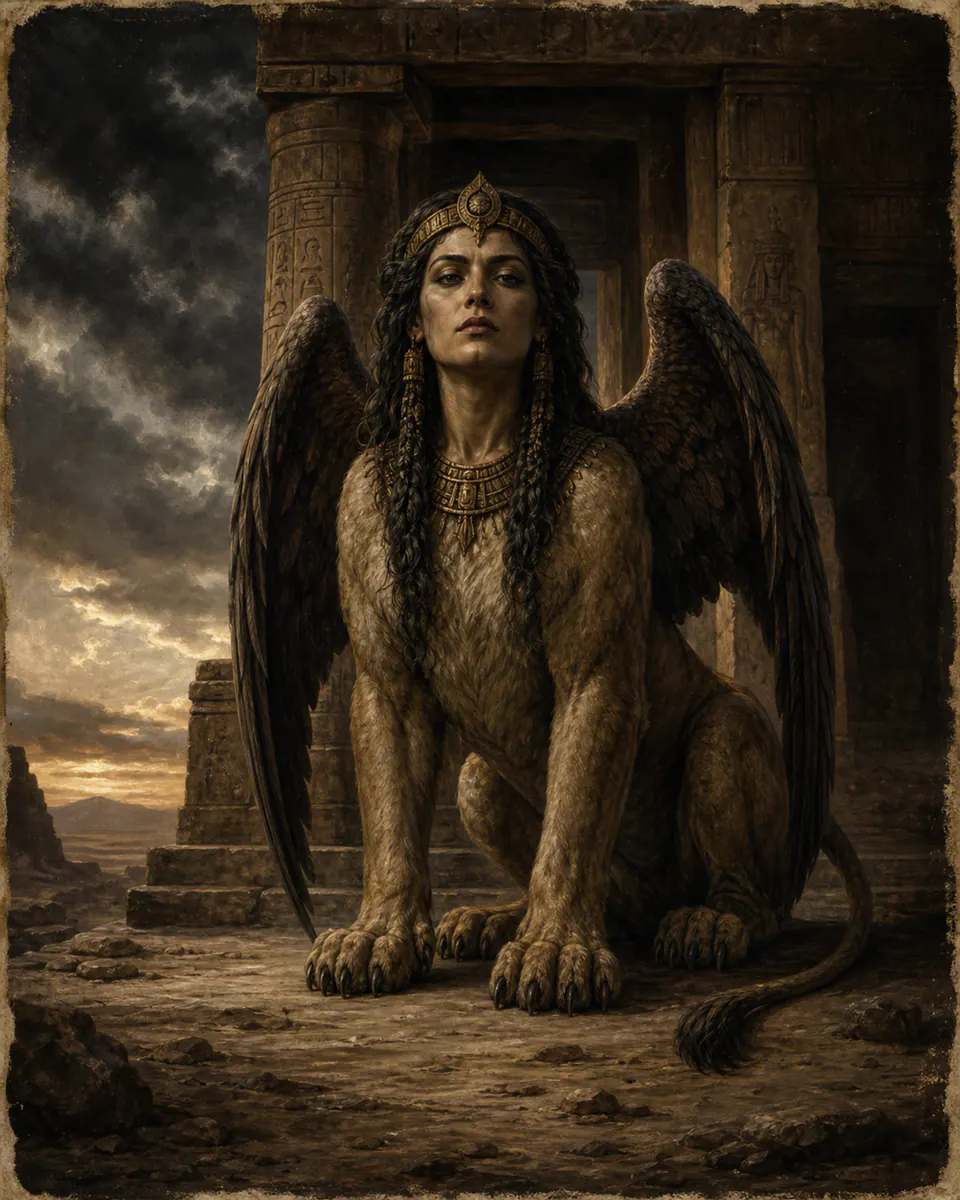
Origin and tradition
Egyptian and Greek traditions use sphinx forms as royal guardians and riddle-bearing threshold monsters. This atlas keeps the older tradition separate from later reports: it locates the legend in Egyptian and Greek Thresholds, Egypt / Greece, and treats sightings as evidence of transmission rather than proof of a verified creature.
Appearance
A lion-bodied human-headed guardian, sometimes winged, with a stillness that makes questions feel fatal. The image and copy should emphasize the legend's sensory logic: place, sound, light, posture, and the emotional pressure it creates for witnesses.
Reported abilities
- Riddle Judgment
- Threshold Guardianship
- Royal Aura
Field notes
The Sphinx tests comprehension, not speed. Its violence begins where understanding fails. Spirit traditions are treated as place-bound memory and moral warning, so the atlas distinguishes the apparition from ordinary animals or costumed people.
Related traditions
A riddle-guardian cousin to Manticore and Lamia, with Jinn-like authority around forbidden knowledge. The comparison is motif-based rather than a claim of direct borrowing: it links Sphinx to related beings through haunting, road danger, unfinished grief, ominous sound, and the way a location becomes charged by repeated storytelling, while preserving its local name, place, and cultural function.