Rakshasa Legend, Origin and Folklore | Tabula Supernaturalis
Rakshasa is catalogued under Shapeshifters & Lycanthropes from India Epic Forests, India. Read origin, appearance, sightings, cultural cousins, and source...
Origin and tradition
Hindu and Buddhist traditions describe rakshasas as powerful beings, often demonic, deceptive, and able to change form. This atlas keeps the older tradition separate from later reports: it locates the legend in India Epic Forests, India, and treats sightings as evidence of transmission rather than proof of a verified creature.
Appearance
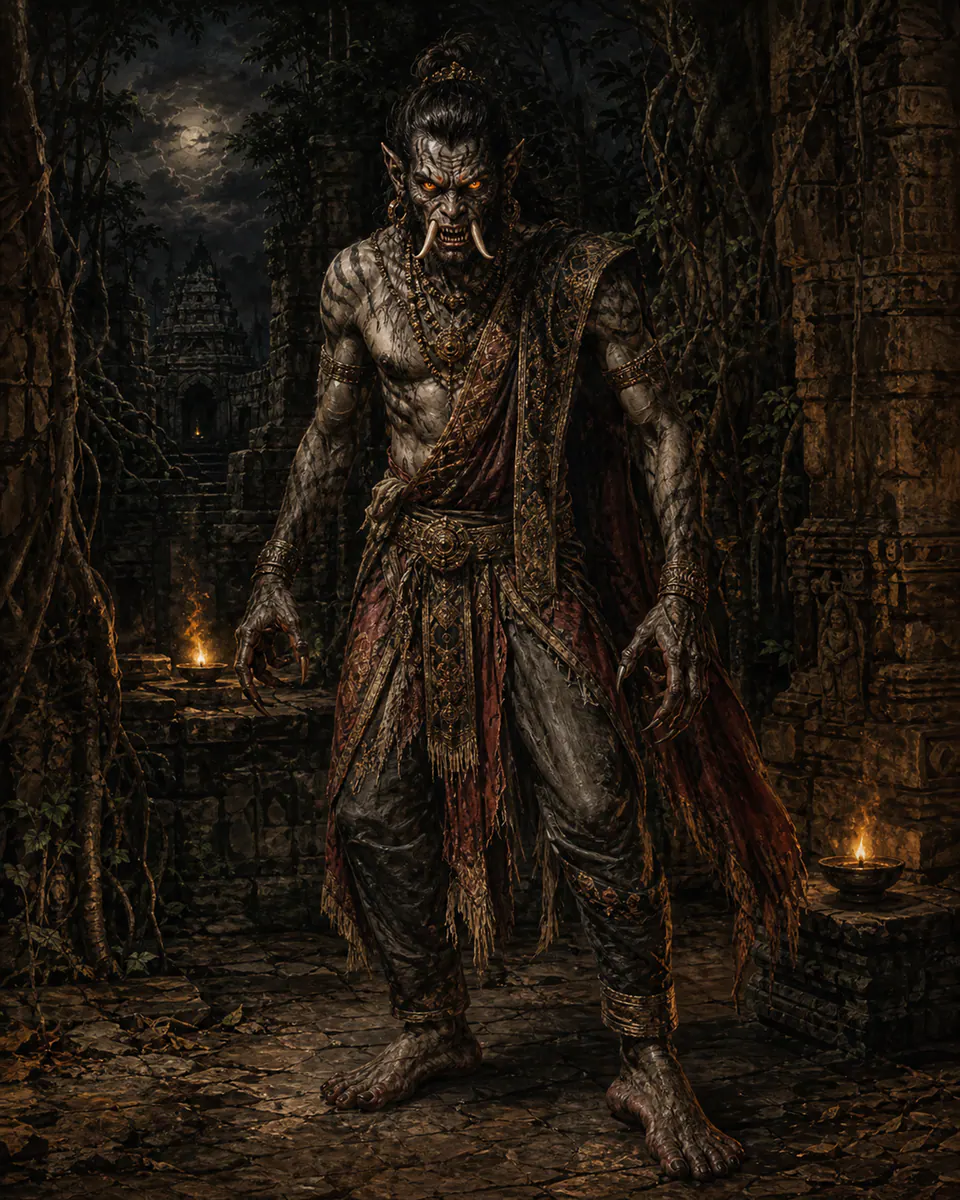
A tusked humanoid or beautiful stranger whose true shape may show claws, blazing eyes, and backward moral gravity. The design should preserve the transformation clue, showing the boundary between human, animal, and uncanny form rather than settling on one ordinary body.
Reported abilities
- Human Disguise
- Battle Fury
- Illusion Craft
Field notes
Rakshasa stories make hospitality dangerous. The stranger at the edge of the forest may be a warrior, eater, or king in disguise. Shapeshifter entries are read as social warnings as much as monster reports, so the atlas keeps attention on disguise, taboo behavior, and the moment the hidden form breaks through.
Related traditions
A South Asian shapeshifting demon cousin to Lamia, Ghoul, and Oni, sharing appetite and disguise motifs. The comparison is motif-based rather than a claim of direct borrowing: it links Rakshasa to related beings through dual identity, forbidden transformation, reversed tracks, animal doubles, and anxieties about neighbors who are not what they appear to be, while preserving its local name, place, and cultural function.