Nagual Legend, Origin and Folklore | Tabula Supernaturalis
Nagual is catalogued under Shapeshifters & Lycanthropes from Oaxaca Highlands, Mexico. Read origin, appearance, sightings, cultural cousins, and source notes.
Origin and tradition
Zapotec and Mixtec belief in 'tonal'—spiritual companion beasts. Corrupt individuals cut ties with their tonal to transform into wild jaguars. This atlas keeps the older tradition separate from later reports: it locates the legend in Oaxaca Highlands, Mexico, and treats sightings as evidence of transmission rather than proof of a verified creature.
Appearance
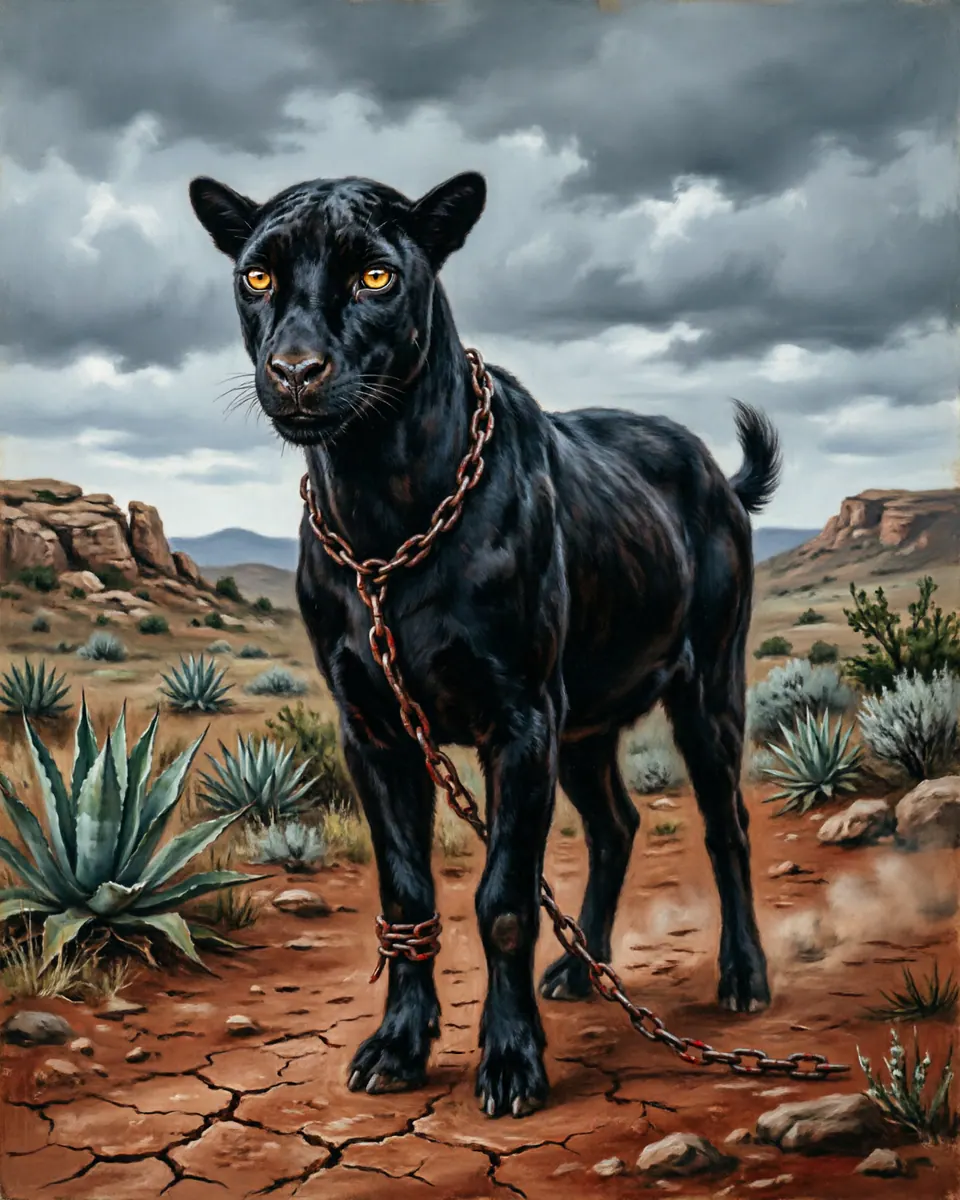
A sleek black jaguar or massive mountain goat, possessing intelligent human eyes and carrying iron chains that rattle across dirt roads. The design should preserve the transformation clue, showing the boundary between human, animal, and uncanny form rather than settling on one ordinary body.
Reported abilities
- Curse Binding
- Absolute Forest Shadows
- Rattling Chains Illusion
Field notes
Often encountered along dirt highways at midnight. Naguals do not attack unless provoked, preferring to steal livestock and laugh at confused human trackers. Shapeshifter entries are read as social warnings as much as monster reports, so the atlas keeps attention on disguise, taboo behavior, and the moment the hidden form breaks through.
Related traditions
A jaguar-oriented equivalent to the Navajo Skinwalker, tied loosely to the pre-Columbian shamanistic companion structures. The comparison is motif-based rather than a claim of direct borrowing: it links Nagual to related beings through dual identity, forbidden transformation, reversed tracks, animal doubles, and anxieties about neighbors who are not what they appear to be, while preserving its local name, place, and cultural function.