La Mona Legend, Origin and Folklore | Tabula Supernaturalis
La Mona is catalogued under Shapeshifters & Lycanthropes from Central Valley Rooftops, Costa Rica. Read origin, appearance, sightings, cultural cousins, and...
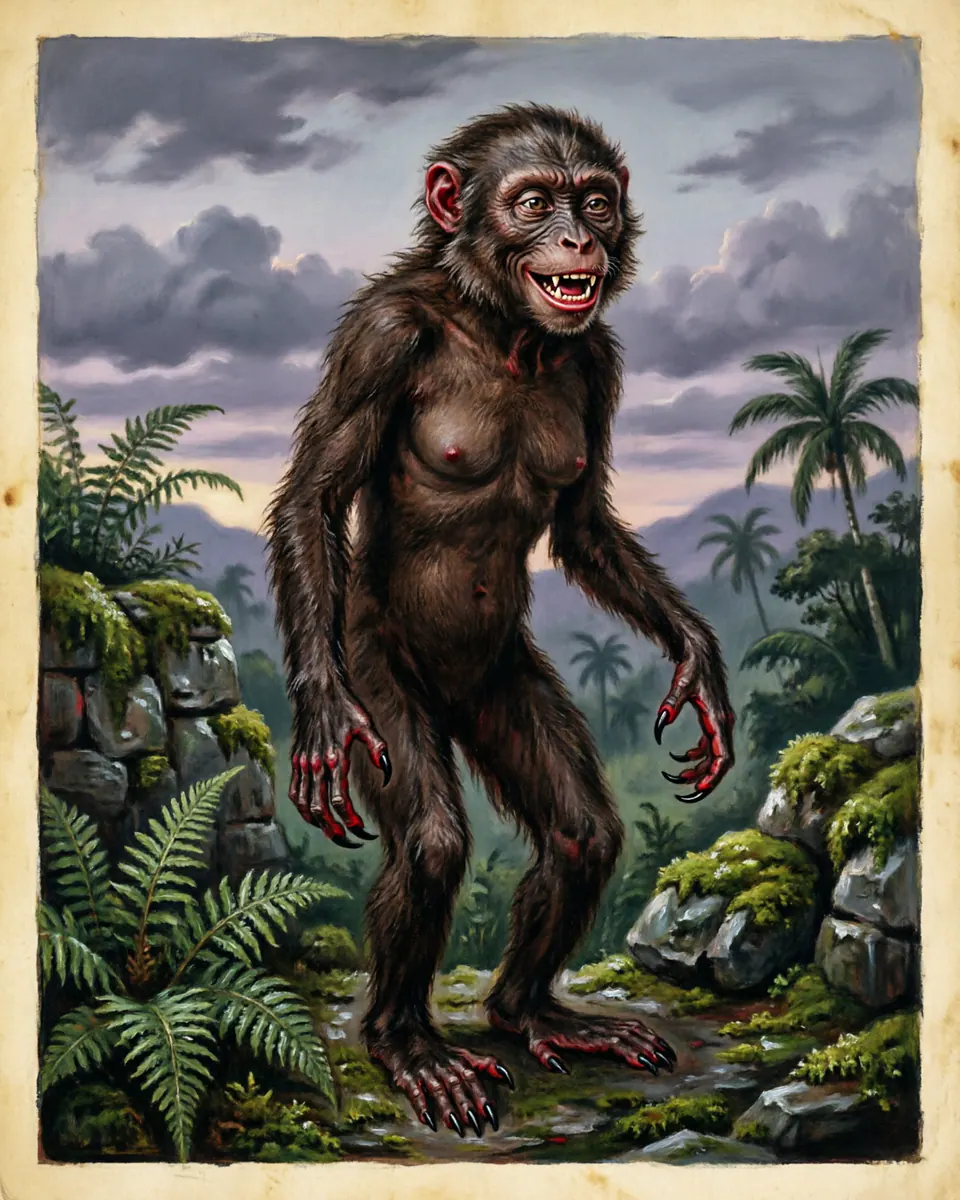
Origin and tradition
Costa Rican and Nicaraguan stories describe witches who transform into monkey-like creatures to leap across roofs and frighten households. This atlas keeps the older tradition separate from later reports: it locates the legend in Central Valley Rooftops, Costa Rica, and treats sightings as evidence of transmission rather than proof of a verified creature.
Appearance
A dark, long-limbed monkey-woman with human intelligence, clawed hands, and a shriek that sounds too much like laughter. The design should preserve the transformation clue, showing the boundary between human, animal, and uncanny form rather than settling on one ordinary body.
Reported abilities
- Rooftop Leaping
- Witch-Body Separation
- Night Shriek Panic
Field notes
La Mona is often used as a warning about witchcraft hiding inside ordinary neighborhoods rather than distant forests. Shapeshifter entries are read as social warnings as much as monster reports, so the atlas keeps attention on disguise, taboo behavior, and the moment the hidden form breaks through.
Related traditions
A monkey-form cousin to Nagual and Huay Chivo shapeshifters, anchored in domestic rooftops rather than wilderness. The comparison is motif-based rather than a claim of direct borrowing: it links La Mona to related beings through dual identity, forbidden transformation, reversed tracks, animal doubles, and anxieties about neighbors who are not what they appear to be, while preserving its local name, place, and cultural function.