Mokele-mbembe Legend, Origin and Folklore | Tabula Supernaturalis
Mokele-mbembe is catalogued under Lake & Sea Monsters from Likouala Swamps, Republic of the Congo. Read origin, appearance, sightings, cultural cousins, and...
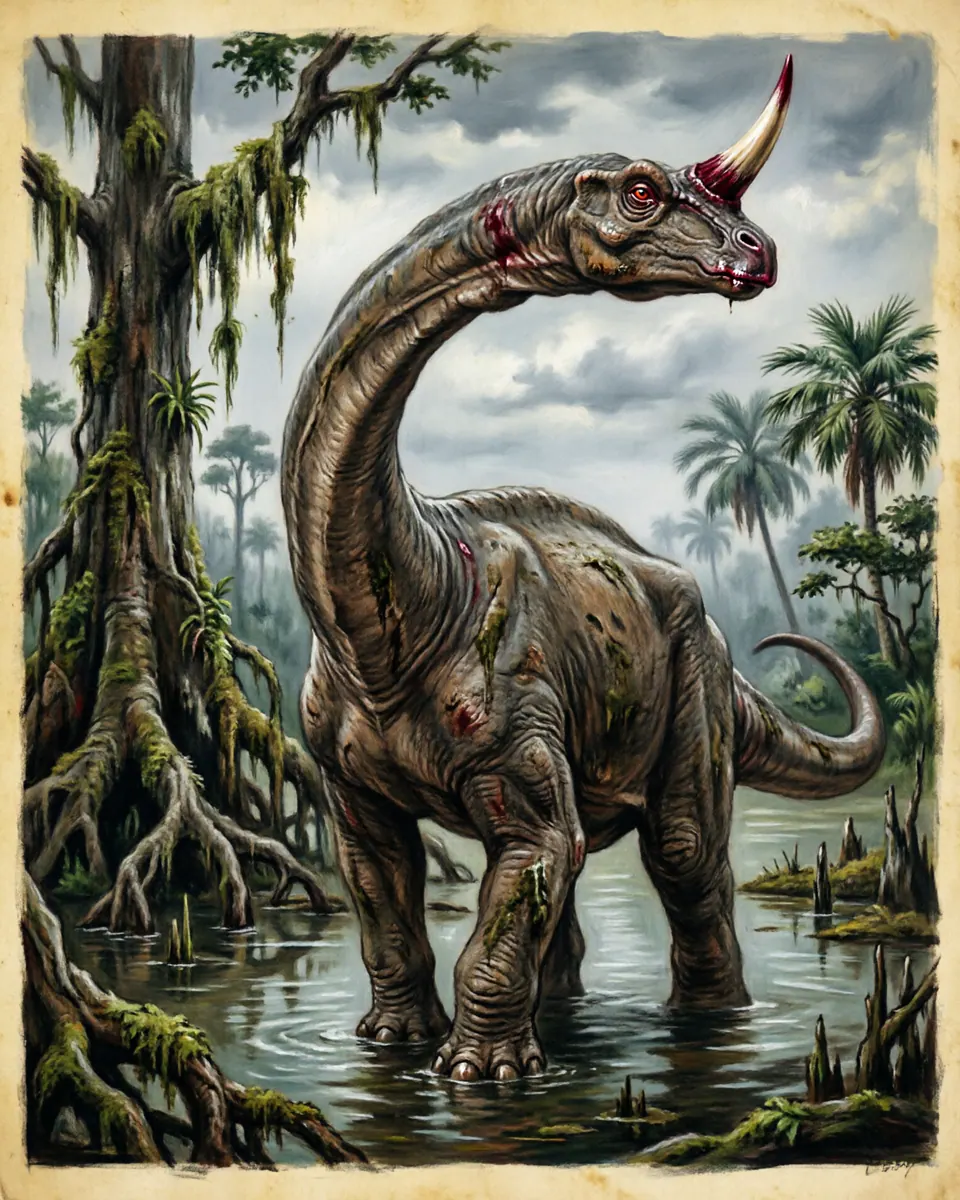
Origin and tradition
Recorded by French missionaries in 1776 who found massive clawed footprints with a circumference of over three feet in the deep jungle. This atlas keeps the older tradition separate from later reports: it locates the legend in Likouala Swamps, Republic of the Congo, and treats sightings as evidence of transmission rather than proof of a verified creature.
Appearance
An animal resembling a sauropod dinosaur, with a long flexible neck, a single ivory tusk or horn, a heavy tail, and elephantine legs. The most important visual clue is how the body breaks the water: scale, shoreline context, and wet hide should stay readable so the legend does not collapse into a generic reptile or fish.
Reported abilities
- Submerging in Swamp Muck
- Canoe Capsizing Charges
- Impenetrable Reptilian Hide
Field notes
Central African reports often frame Mokele-mbembe as herbivorous but aggressively territorial, especially around rivers, marshes, and hippo paths. The atlas records that recurring motif without treating it as zoological confirmation. Because water legends often mix animal misidentification, hazard warnings, and sacred-place etiquette, the atlas treats recurring geography and behavior as more important than a single fixed anatomy.
Related traditions
Represents a classical 'living fossil' archetype resembling South America's prehistoric Mapinguari, though strictly bound to warm primeval river channels. The comparison is motif-based rather than a claim of direct borrowing: it links Mokele-mbembe to related beings through water danger, hidden depth, shoreline taboo, and the way witnesses describe scale through waves, boats, or river crossings, while preserving its local name, place, and cultural function.