Mapinguari Legend, Origin and Folklore | Tabula Supernaturalis
Mapinguari is catalogued under Humanoid Cryptids from Amazon Rain Forest, Brazil / Peru. Read origin, appearance, sightings, cultural cousins, and source...
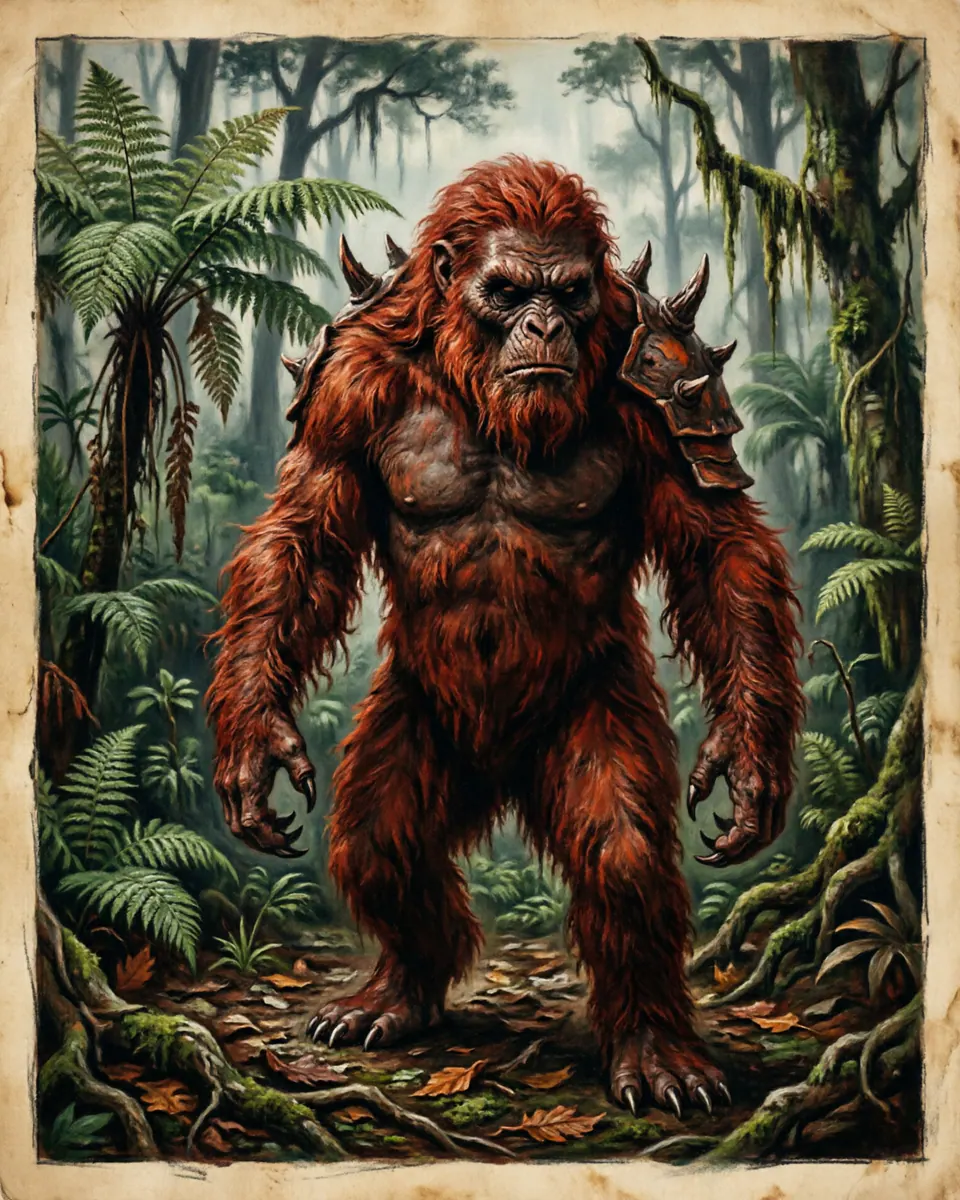
Origin and tradition
Indigenous Amazonians tell of a legendary beast whose horrific belly-mouth roars when it scent trails human hunters. This atlas keeps the older tradition separate from later reports: it locates the legend in Amazon Rain Forest, Brazil / Peru, and treats sightings as evidence of transmission rather than proof of a verified creature.
Appearance
A colossal, upright beast with long matted red fur, clawed hands pointing inward, and a hard, armored carapace on its back. The silhouette should stress posture, gait, hair or skin texture, and terrain clues rather than turning the being into a generic human or ape.
Reported abilities
- Numbing Odor Projection
- Bone-Crushing Claw Swipes
- Rotting Flesh Hypnosis
Field notes
The description matches the prehistoric Giant Ground Sloth (Megatherium) almost exactly, including the inward claws and skin bone-plates (osteoderms) that act like armor. Humanoid cryptid reports are strongest when the copy separates footprint lore, wilderness fear, and local naming from claims of a confirmed species.
Related traditions
An ancient forest relic representing ancestral ground megafauna, sharing a red-coated primate-sloth crossover look with Florida's Skunk Ape. The comparison is motif-based rather than a claim of direct borrowing: it links Mapinguari to related beings through wild-person traditions, marginal landscapes, strange tracks, nocturnal calls, and the fear that something near-human lives just outside settlement, while preserving its local name, place, and cultural function.