Kitsune (Nine-Tailed Fox) Legend, Origin and Folklore | Tabula Supernaturalis
Kitsune (Nine-Tailed Fox) is catalogued under Shapeshifters & Lycanthropes from Mountain Forests, Japan. Read origin, appearance, sightings, cultural...
Origin and tradition
First chronicled in Chinese bestiary 'Shan Hai Jing' but developed deep religious roots in Japan as messengers of the Rice Deity Inari. This atlas keeps the older tradition separate from later reports: it locates the legend in Mountain Forests, Japan, and treats sightings as evidence of transmission rather than proof of a verified creature.
Appearance
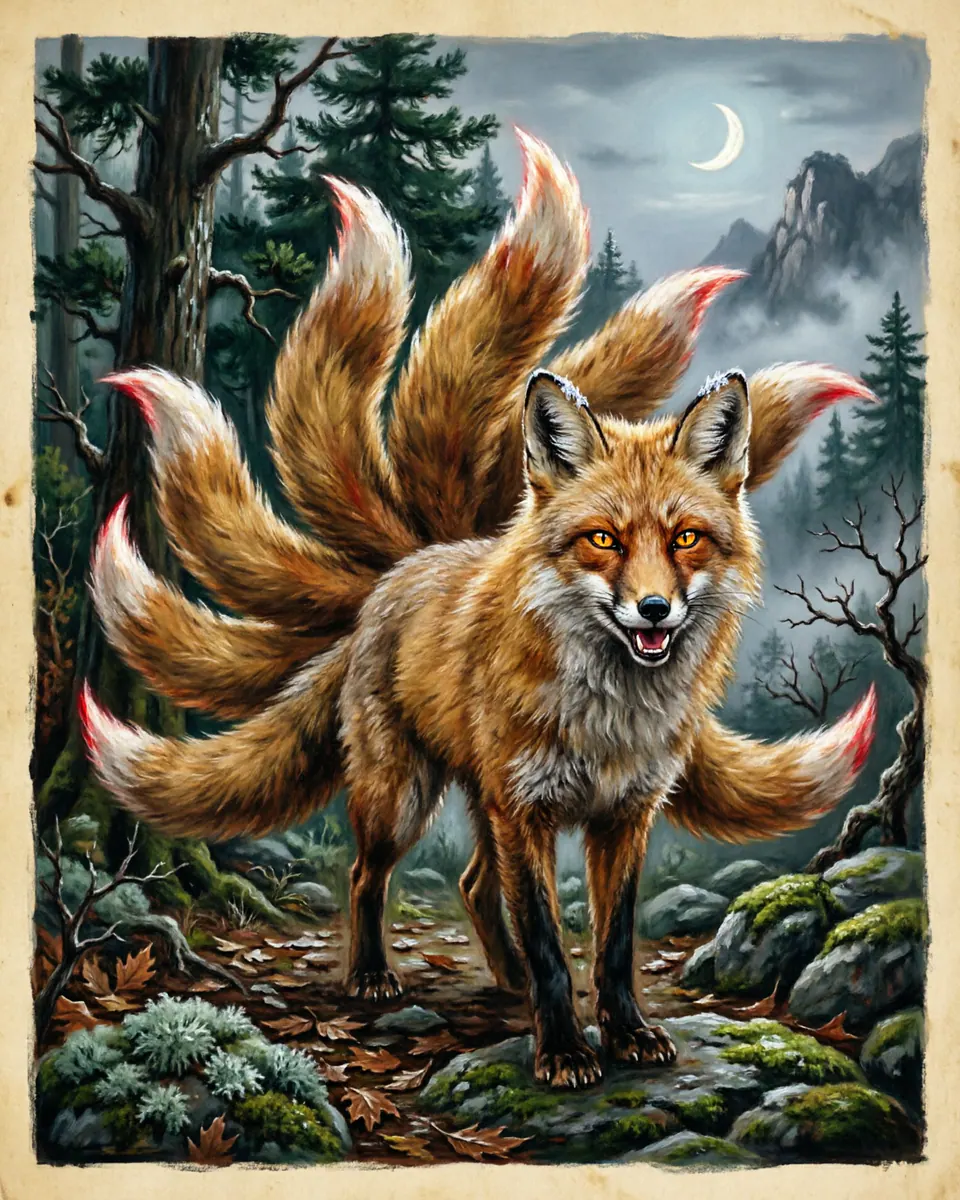
A beautiful, golden-furred fox that grows additional tails as it gathers wisdom. At nine tails, its fur turns white or golden-red. The design should preserve the transformation clue, showing the boundary between human, animal, and uncanny form rather than settling on one ordinary body.
Reported abilities
- Human Illusions (typically Beautiful Women)
- Fox-Fire (Kitsunebi) Manipulation
- Dream-Walking Possession
Field notes
Kitsune are highly mischievous. If they possess a human (Kitsunetsuki), the victim exhibits odd habits like eating raw tofu and running around naked. Shapeshifter entries are read as social warnings as much as monster reports, so the atlas keeps attention on disguise, taboo behavior, and the moment the hidden form breaks through.
Related traditions
An elegant, magical shapeshifter who uses seduction, comparable to the Celtic Selkie and the general trickster Fae folk. The comparison is motif-based rather than a claim of direct borrowing: it links Kitsune (Nine-Tailed Fox) to related beings through dual identity, forbidden transformation, reversed tracks, animal doubles, and anxieties about neighbors who are not what they appear to be, while preserving its local name, place, and cultural function.