Simurgh Legend, Origin and Folklore | Tabula Supernaturalis
Simurgh is catalogued under Dragons & Sea Serpents from Persian Highlands, Iran. Read origin, appearance, sightings, cultural cousins, and source notes.
Origin and tradition
Persian mythology presents the Simurgh as an ancient, benevolent bird of wisdom, healing, and royal destiny. This atlas keeps the older tradition separate from later reports: it locates the legend in Persian Highlands, Iran, and treats sightings as evidence of transmission rather than proof of a verified creature.
Appearance
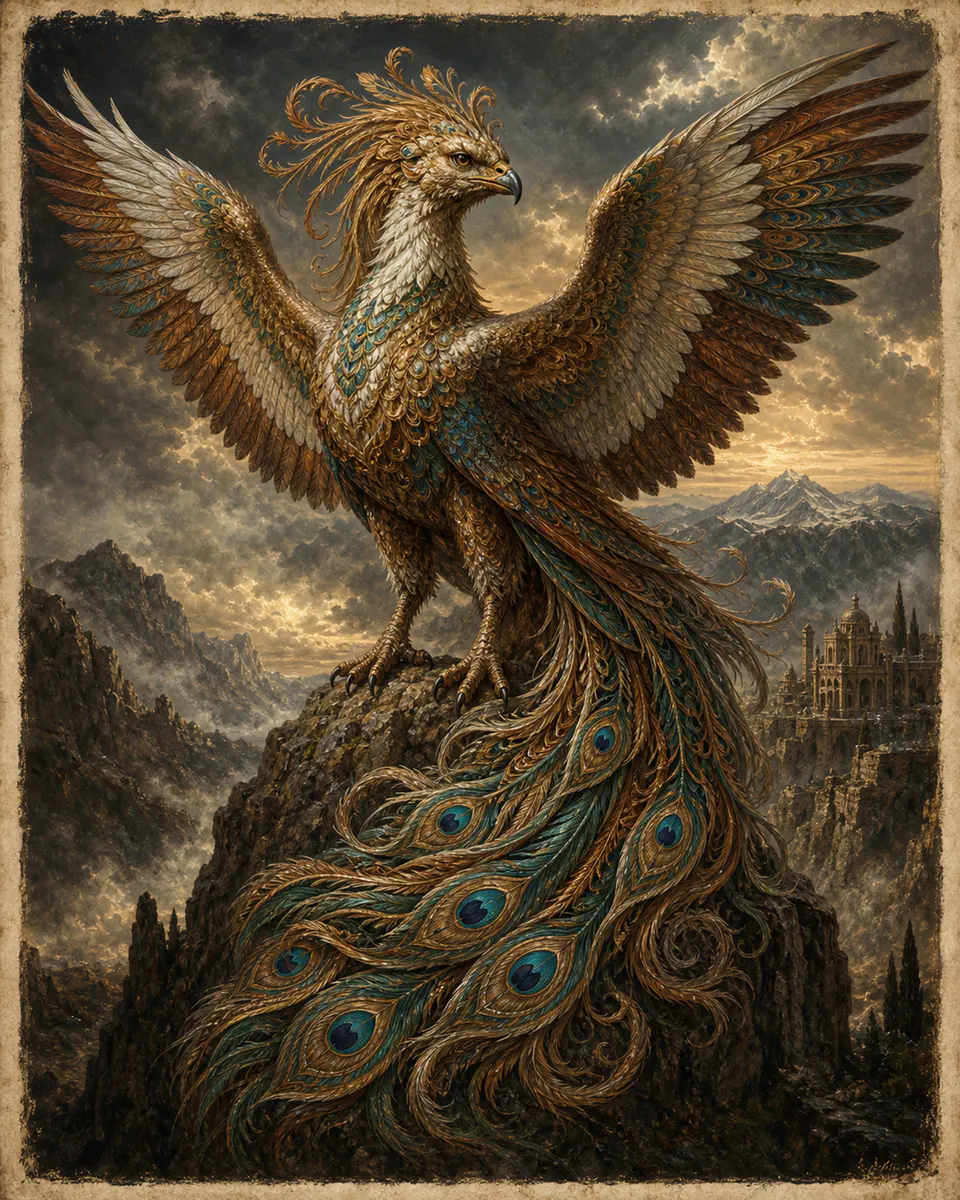
A colossal peacock-eagle with canine or leonine hints, copper feathers, and a face old enough to remember creation. The body plan should keep the legendary signature clear, whether serpent, bird, hybrid, or scaled guardian, with scale cues that separate it from a normal animal.
Reported abilities
- Healing Feather
- Prophetic Counsel
- World-Tree Flight
Field notes
Unlike many monsters here, Simurgh is often a helper. The danger is not malice, but the scale of knowledge it carries. Dragon and great-serpent traditions often carry political, elemental, or cosmological meaning, so size, habitat, and symbolic function matter as much as anatomy.
Related traditions
A wisdom-bird cousin to Roc and Garuda, closer to Griffin in nobility than to predatory sky monsters. The comparison is motif-based rather than a claim of direct borrowing: it links Simurgh to related beings through colossal scale, elemental force, guarded treasure or thresholds, serpent motion, wings or horns, and the old idea that landscape itself can become animate, while preserving its local name, place, and cultural function.