Naga Legend, Origin and Folklore | Tabula Supernaturalis
Naga is catalogued under Dragons & Sea Serpents from Ganges Basin, India / Nepal. Read origin, appearance, sightings, cultural cousins, and source notes.
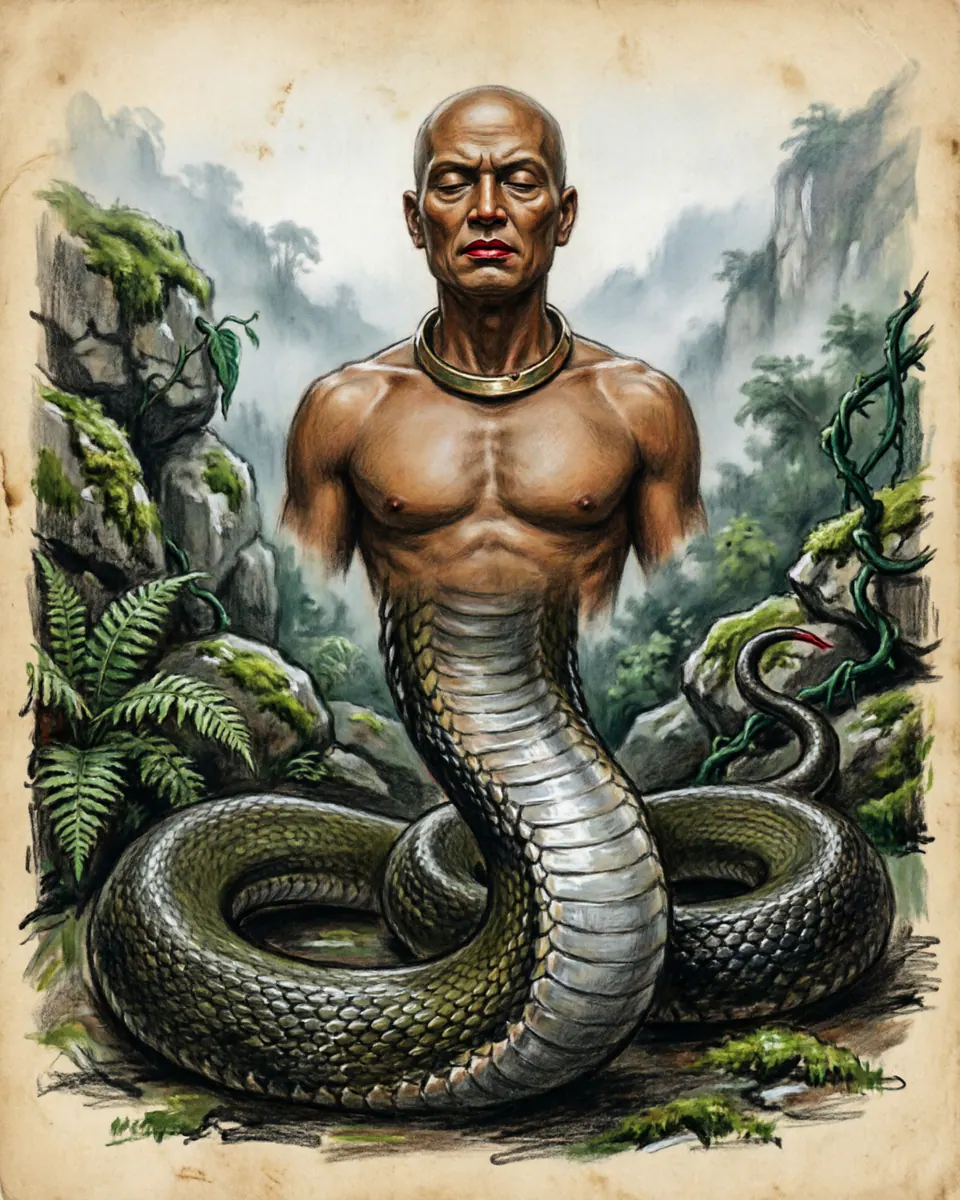
Origin and tradition
Rigvedic scriptures recording powerful underworld serpent-folk who guard sacred treasures and live in the gorgeous subterranean kingdom of Patala. This atlas keeps the older tradition separate from later reports: it locates the legend in Ganges Basin, India / Nepal, and treats sightings as evidence of transmission rather than proof of a verified creature.
Appearance
A magnificent human torso from the head to the chest, merging seamlessly with the long scaly lower coils of a king cobra. The body plan should keep the legendary signature clear, whether serpent, bird, hybrid, or scaled guardian, with scale cues that separate it from a normal animal.
Reported abilities
- Lethal Neurotoxic Venom
- Underground Earth Burrowing
- Weather Control (Rain-making)
Field notes
Nagas are highly respected in Buddhism and Hinduism. Mucalinda, the Naga King, wrapped his massive coils around the Buddha during a 7-day storm to cover him from the heavy rain. Dragon and great-serpent traditions often carry political, elemental, or cosmological meaning, so size, habitat, and symbolic function matter as much as anatomy.
Related traditions
Direct cousins with the Greek Lamia, but carrying divine and agricultural protector status rather than monstrous cannibalistic traits. The comparison is motif-based rather than a claim of direct borrowing: it links Naga to related beings through colossal scale, elemental force, guarded treasure or thresholds, serpent motion, wings or horns, and the old idea that landscape itself can become animate, while preserving its local name, place, and cultural function.