Cetus Legend, Origin and Folklore | Tabula Supernaturalis
Cetus is catalogued under Lake & Sea Monsters from Greek Mythic Coasts, Greece / Ethiopia. Read origin, appearance, sightings, cultural cousins, and source...
Origin and tradition
Greek mythology uses Cetus for monstrous sea beasts, including the creature sent against Andromeda. This atlas keeps the older tradition separate from later reports: it locates the legend in Greek Mythic Coasts, Greece / Ethiopia, and treats sightings as evidence of transmission rather than proof of a verified creature.
Appearance
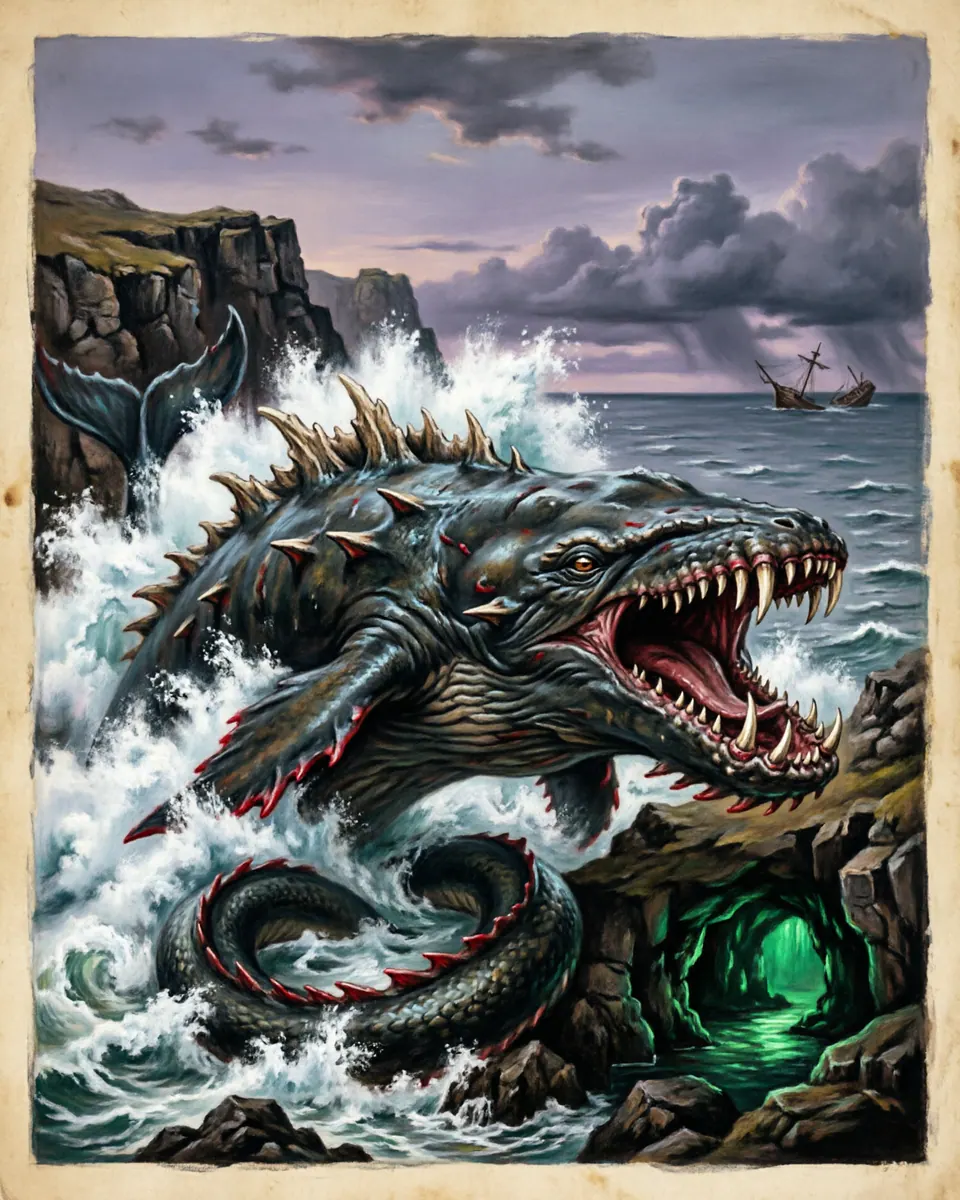
A whale-serpent-dragon of jagged fins, crushing jaws, and surf exploding around its back. The most important visual clue is how the body breaks the water: scale, shoreline context, and wet hide should stay readable so the legend does not collapse into a generic reptile or fish.
Reported abilities
- Coastal Devastation
- Sacrificial Demand
- Sea-Dragon Strike
Field notes
Cetus is the Greek sea monster as civic crisis: the coast itself demands a hero. Because water legends often mix animal misidentification, hazard warnings, and sacred-place etiquette, the atlas treats recurring geography and behavior as more important than a single fixed anatomy.
Related traditions
A Greek sea-dragon cousin to Hydra, Siren, and Aspidochelone, tying open water to heroic rescue tales. The comparison is motif-based rather than a claim of direct borrowing: it links Cetus to related beings through water danger, hidden depth, shoreline taboo, and the way witnesses describe scale through waves, boats, or river crossings, while preserving its local name, place, and cultural function.